Why the project is important
The transformation of the energy system is bringing about a massive expansion of renewable energies such as solar power and wind power. Rising volatility is pushing traditional processes to their capacity limits. The resulting high manual effort puts a huge burden on system operation and prevents existing cost-cutting potential from being fully harnessed. This is exactly where the Optimizer Autopilot comes in. It represents a pioneering solution for the whole of Europe that automates the activation of control energy with the help of AI, optimising the associated costs. This reduces the strain on the grid control room and supports stable grid operation.
Project
Challenge
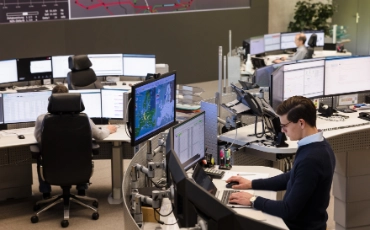
In order to keep the grid balanced at all times, deviations between production and consumption must be identified and balanced out at an early stage. This is one of the key responsibilities of the specialists in the grid control room. The grid is designed for a balance between generation and consumption. Deviations within a defined margin of tolerance are normal and are continuously balanced out. However, major or persistent imbalances can jeopardise stable grid operation.
The real challenge for Swissgrid lies not only in recognising these deviations, but also in activating the appropriate control energy as quickly and cost-effectively as possible. To do so, mFRR (manual Frequency Restoration Reserve) is used first, reserving aFRR (automatic Frequency Restoration Reserve) for critical situations. Deciding which market product is most suitable in a specific case is a complex and demanding task. The specialists in the grid control room have hardly any time for manual analysis during busy day-to-day operations. What is more, the complexity in real time exceeds the human analysis capacity. Consistently cost-optimised decisions cannot be guaranteed.
Solution
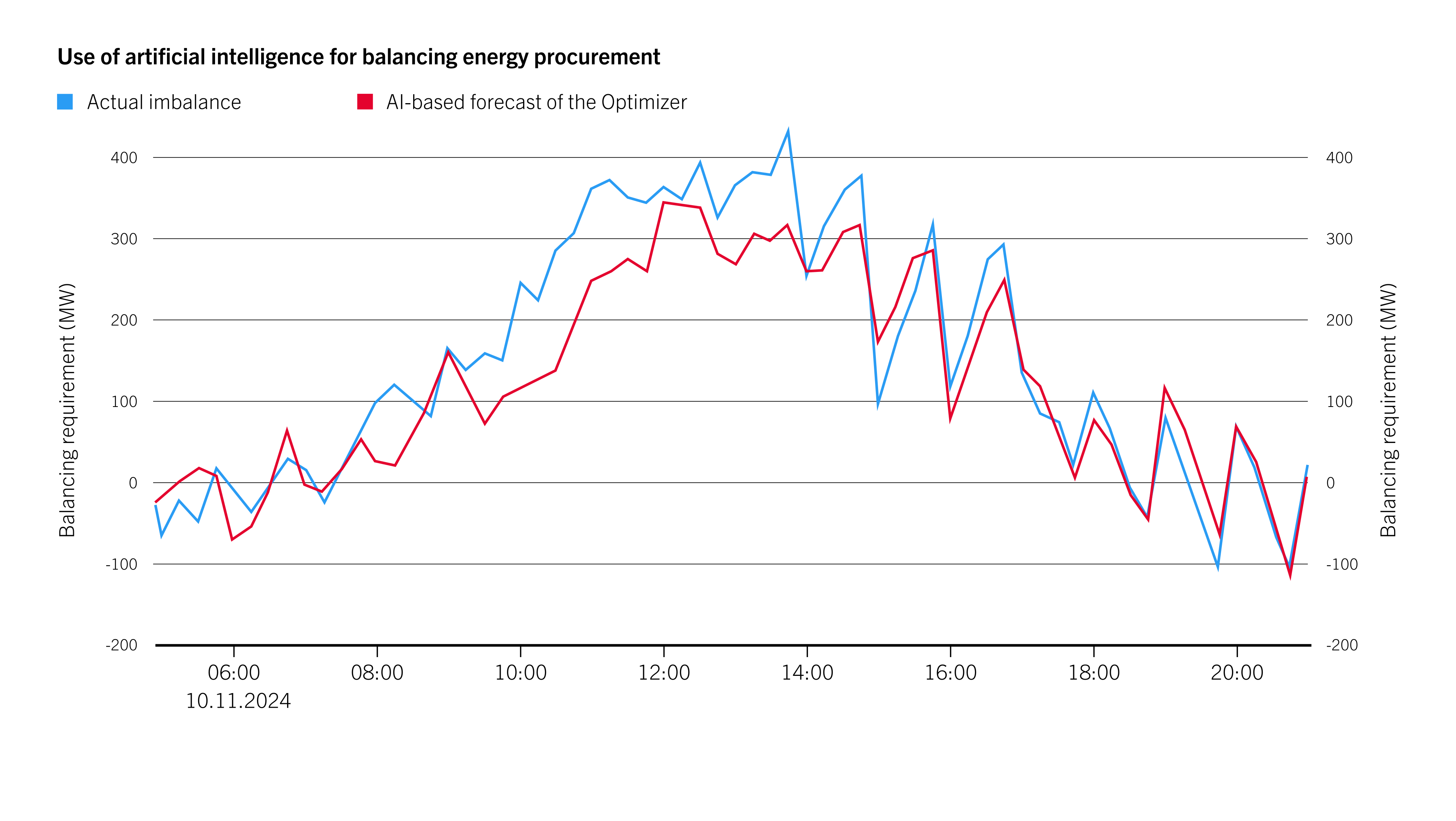
The Optimizer Autopilot uses artificial intelligence to continuously monitor the balance in the grid, automatically evaluate relevant data and control the activation of control energy in the most favourable market. This makes the process not only faster and more precise, but also more economical – leaving the specialists in the grid control room free to concentrate on higher-level control and monitoring.
Two core technological components make this precision and efficiency possible:
- Model orchestration and automated operations (MLOps): Our forecasts are based on a large number of machine learning models that are continuously being enhanced. The cycle is orchestrated by an MLOps process. Like a football coach who carefully adjusts the team formation and line-up depending on the opponent, the system autonomously selects the best model architectures and parameters and automatically transfers them to active grid operations via DevOps.
- Stochastic portfolio optimisation for market allocation: Just like when optimising a portfolio, the system robustly distributes energy requirements across different markets. The ideal distribution is calculated by stochastic optimisation, thereby achieving a more cost-effective solution overall. This prevents price jumps due to excessive volumes in individual markets.
Benefits and results
The Optimizer Autopilot is an important step towards a modern, flexible energy system. It makes grid operations smarter, supports the grid control room by supplying data-based recommendations, reduces costs and increases security of supply. This provides new insights into processes and strengthens cooperation between humans and artificial intelligence in system operation. Swissgrid is able to offer a truly innovative product for more efficient, secure and future-proof transmission system management.
Current project status/outlook
Following its successful practical use as a pilot application, the Optimizer Autopilot is being enhanced on an ongoing basis to meet the dynamic requirements of the energy system. These continuous improvements in performance are just the beginning: we are expanding the Optimizer Autopilot into a modular product family that represents the basis for further automation steps. The aim is to extend the efficiency gains to all the relevant challenges in the control energy process.