Why the topic is important
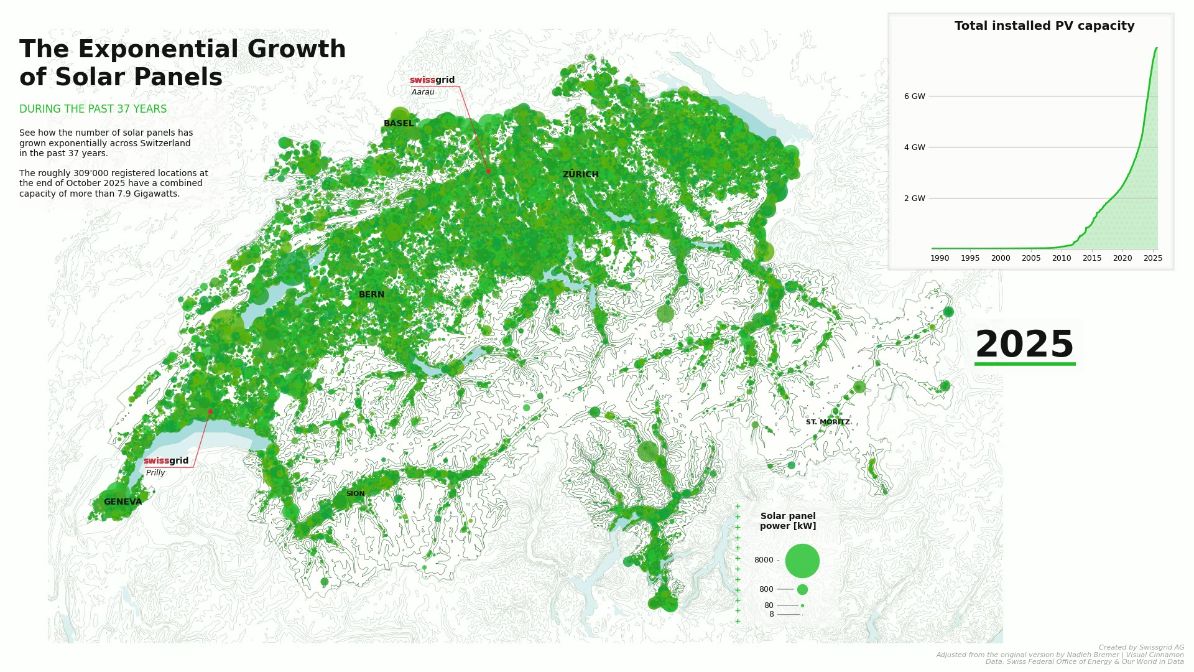
By the end of 2025, Switzerland was already covering its electricity consumption entirely with solar energy at certain hours of the day – thanks to high photovoltaic production. If production and consumption in the grid are not balanced, this imbalance must be balanced out by Swissgrid using control energy. As a result of the expansion of photovoltaics (PV), it is becoming more and more difficult to balance supply and demand in the grid. Innovative ideas are needed. The «PV Forecasting» project makes it easier to detect volatile electricity generation from solar energy and the associated fluctuations in feed-in at an early stage thanks to precise forecasts. This helps to ensure efficient and stable grid operation.
Project
Challenge
Switzerland’s energy future will be shaped by the rapid expansion of photovoltaics. Electricity generation in Switzerland is becoming more and more decentralised due to substantial growth in the number of small photovoltaic plants. There is a data gap for the «largest photovoltaic plant» in Switzerland – i.e. all the photovoltaic plants combined: there is not enough precise, up-to-date data on the feed-in and forecasts of photovoltaic plants at regional level.
The federal government’s Energy Perspectives 2050+ envisage a strong expansion of photovoltaic plants: by 2035, more than 20% of electricity consumption by end users is expected to be covered by solar energy. Over the next few years, the Swissolar Association is predicting an annual increase in installed capacity of 1.5 gigawatts. Such a large increase in volatile generation poses new challenges for the operation of the transmission system. Unlike the electricity generated by hydropower plants, the production of photovoltaic plants is not controlled.
Although the balance groups play a key role in preparing accurate forecasts, Swissgrid is creating innovative solutions to support these developments. The «PV Forecasting» project aims to significantly improve the data base for internal forecasting of Swiss photovoltaic production. Until now, photovoltaic feed-in forecasts were only available in aggregated form for Switzerland as a whole.
Solution
Swissgrid relies on comprehensive, automated data integration to create high-resolution forecasts from decentralised and volatile photovoltaic feed-in. The Innovations team has developed a forecasting model that provides a solid data base for regional PV forecasts with forecast, nowcast and backcast data.
Automated data acquisition and processing:
In cooperation with the company Pronovo, the master data of all Swiss photovoltaic plants is retrieved from their data base and processed on an ongoing basis. The Meteomatics’ weather API is directly connected to Swissgrid’s internal data platform via an interface so that current weather forecasts can be seamlessly integrated into the photovoltaic forecasts.
Validation and integration:
Linking the data enables geographically detailed, high-resolution forecasts for PV feed-in to be produced. For quality assurance purposes, the forecasts are validated with measurement data from real photovoltaic plants.
Benefits and results
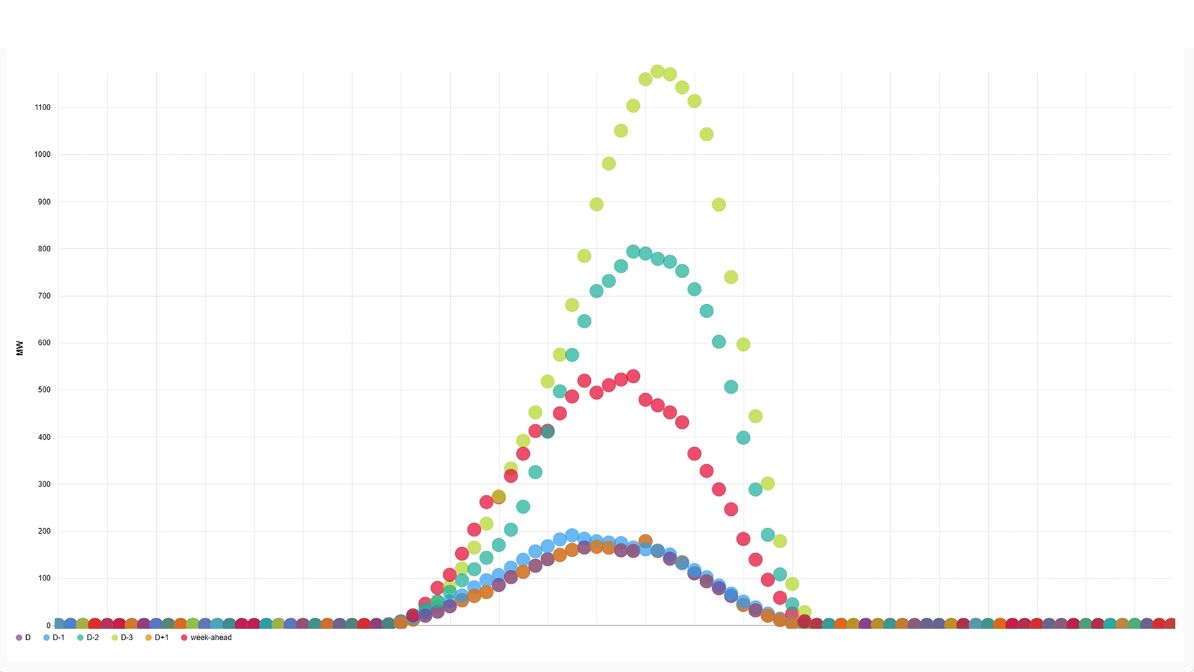
The combination of precise weather forecasts and data on the photovoltaic plants installed in Switzerland results in a forecast with a high temporal and regional resolution. This enables a breakdown to be shown of production by grid region with appropriate aggregation and data processing for various purposes.
High-resolution PV forecasts
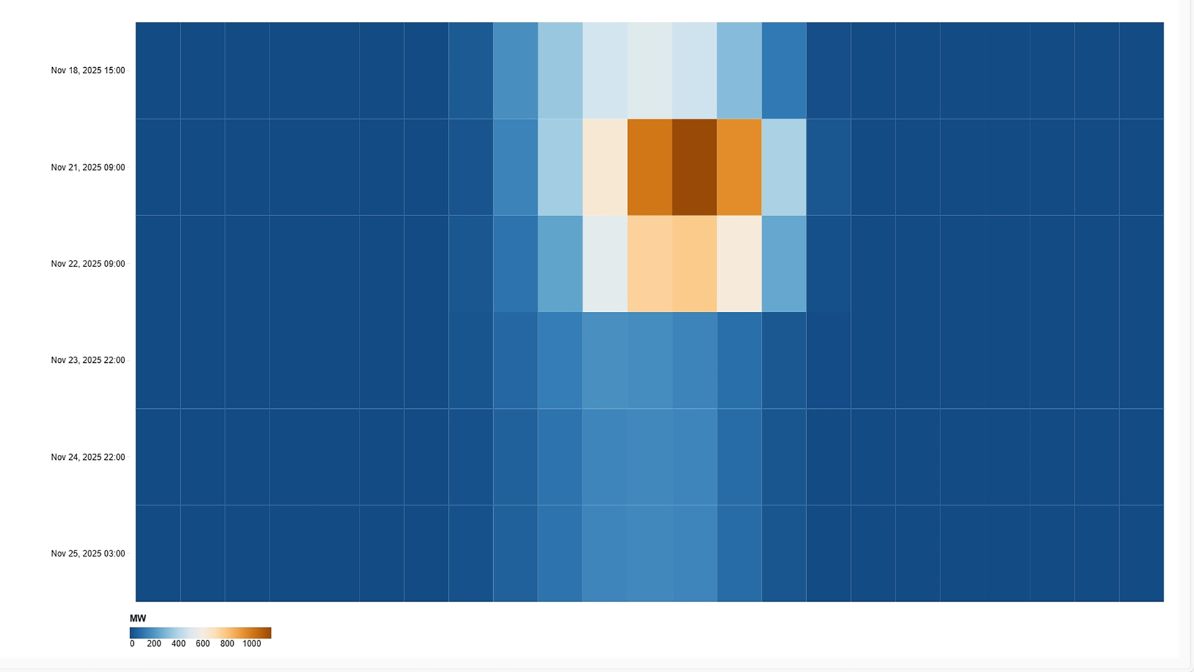
The project provides geographically detailed, high-resolution forecasts of energy production from photovoltaics throughout Switzerland that are updated hourly. These forecasts are then made available to various user groups via a modern cloud infrastructure, and a graphical representation is displayed on an interactive dashboard.
Increasing security of supply on the grid side
Thanks to better data quality on PV production, operators in the Swissgrid grid control room can forecast load flows more precisely, detect imbalances in grid operations at an early stage and optimise the use of control energy. This reduces costs for the Swiss economy and strengthens grid stability.
Modern system integration
Forecasts are provided automatically on an hourly basis, historicised and continuously validated with measurement data from individual systems – both as raw data and in processed form. The data is directly integrated into internal applications via interfaces, making it available for operational and analytical applications.
Current project status/outlook
Automated, hourly PV forecasts are carried out based on the aggregation and updating of PV master data for more than 310,000 plants (status: November 2025). The current focus is on validation with measurement data and integration into operational use cases. Further optimisations are planned, and additional data sources are to be connected.