Why the topic is important
A reliable supply of electricity requires a robust grid infrastructure. This is why the continuous assessment of asset health is becoming increasingly important. IoT sensors provide precise real-time data for predictive asset management and enable operational processes to be optimised – for example by using local weather data to ensure more efficient and secure grid operation.
Project
Challenge
The Swiss transmission grid is the backbone of our supply of electricity, but many systems date back to the 1960s. As Swissgrid expands and strengthens the grid as part of the energy transition, existing systems must be modernised and regularly maintained in parallel (Grid of the future).
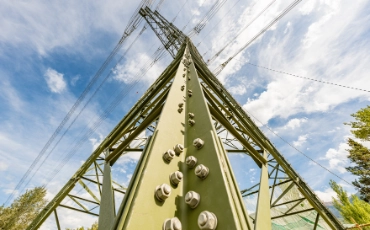
Wear and tear, extreme weather conditions and climatic changes such as permafrost thaw, rockfalls or debris flows put a strain on the structural stability of the 12,000 pylons in the grid. Real-time monitoring is becoming more and more important in order to minimise undetected damage and the risk of outages.
While comprehensive measurement data is already available for substations, the data situation for the 6,700 kilometres of lines has been patchy until now.
Solution
This is why the «Pylonian» innovation project was launched in 2022. With the help of networked IoT (Internet of Things) sensors, precise data on pylon condition was recorded and analysed around the clock on 20 selected pylons. The aim of this proof of concept (PoC) was to test the challenges and benefits of IoT sensor technology in practice and to prepare the roll-out of the technology for large-scale use. Continuous monitoring offers the advantage of detecting structural damage at an early stage and allows the necessary maintenance to be planned in good time – and this increases system availability.
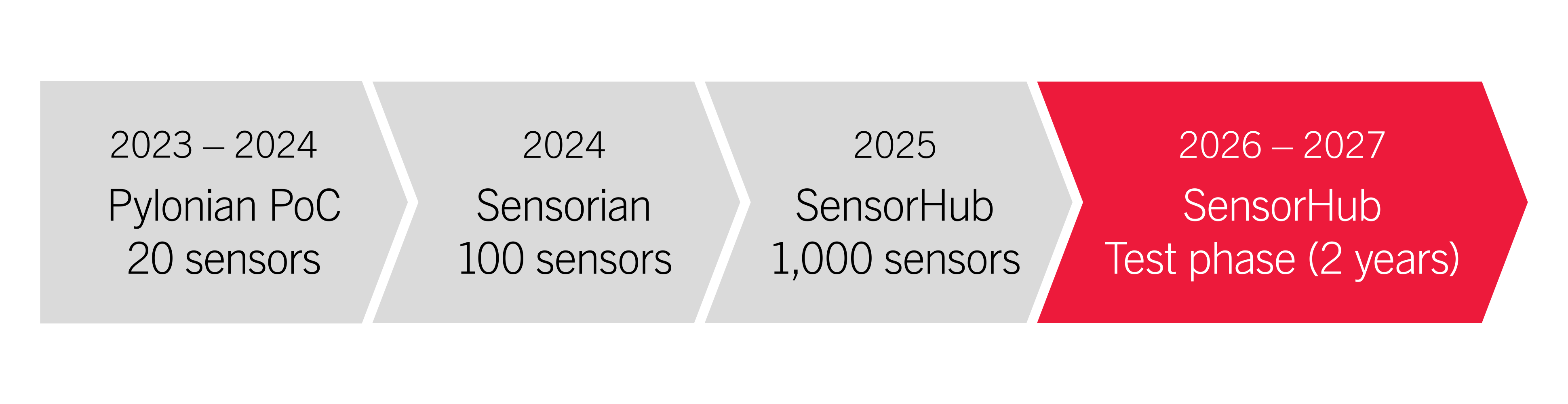
The development was planned in four phases:
Pylonian
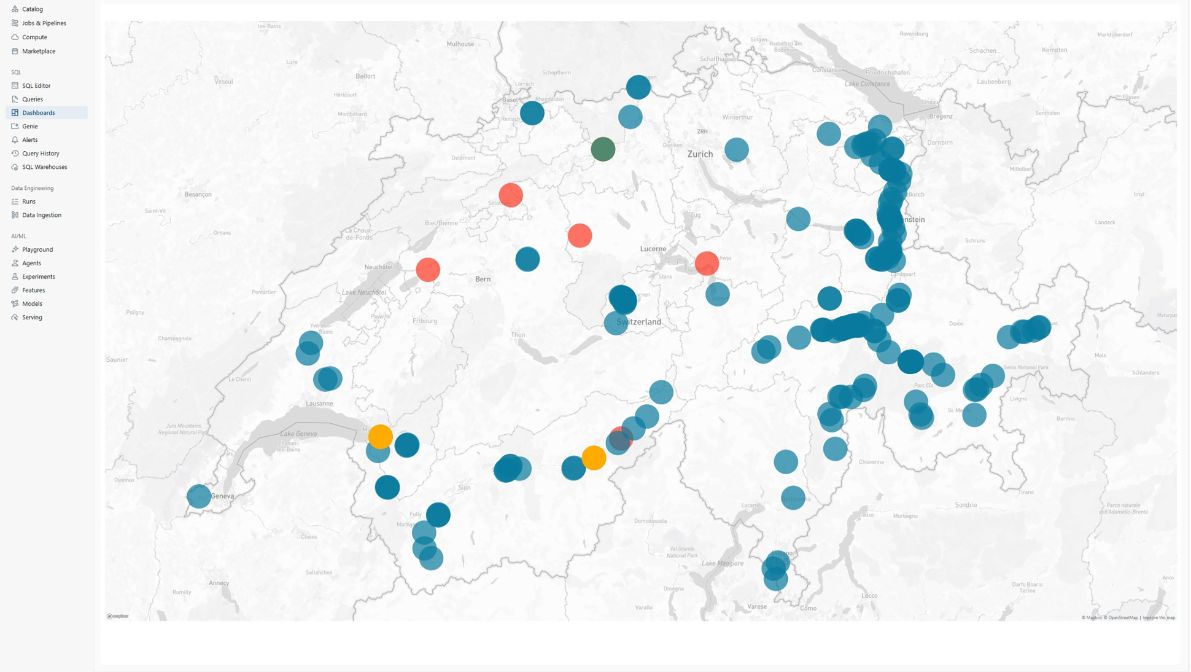
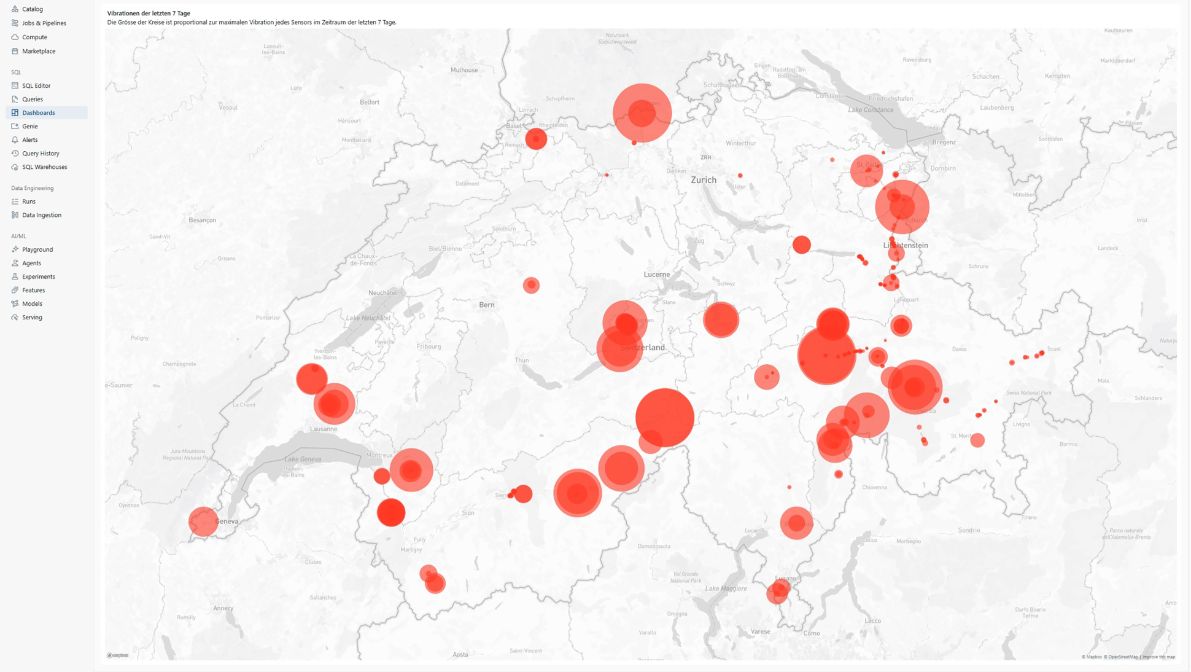
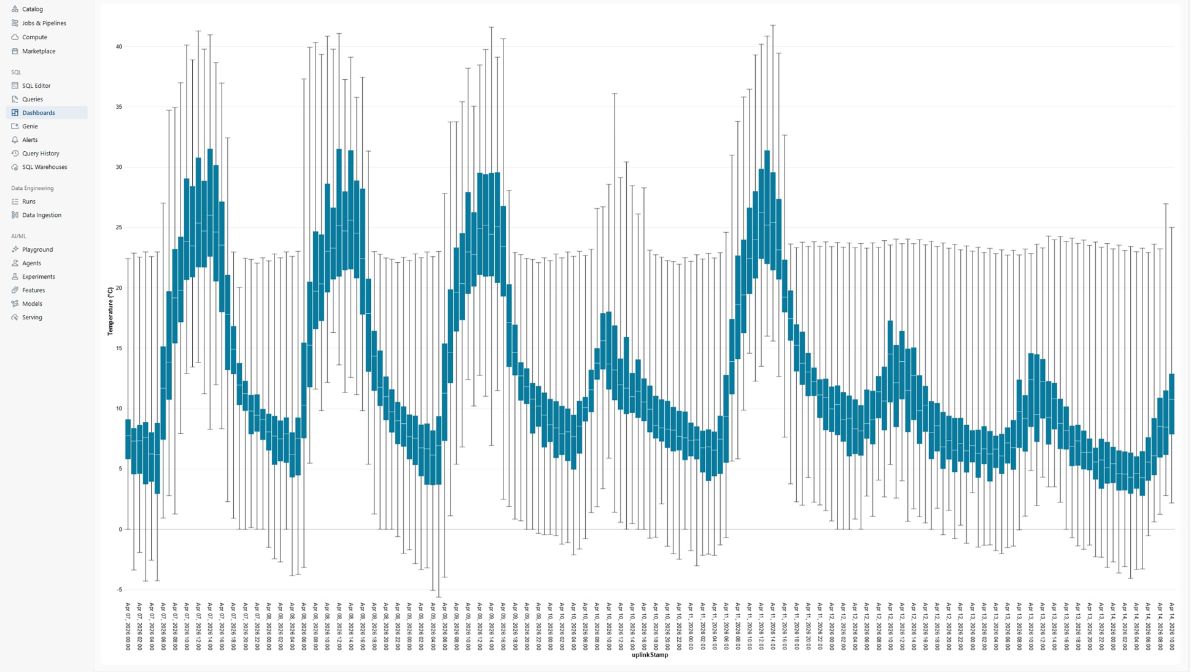
In an initial proof of concept (PoC), Swissgrid developed an end-to-end solution to test the challenges and benefits of IoT sensor technology in practice. To do so, 20 selected electricity pylons were equipped with sensors to measure parameters such as vibration, inclination and weather data.
At the same time, the team also experimented with de-energised lines in order to improve their understanding of typical data patterns. The result was a productive cloud dashboard that has been in use since August 2022. It translates the raw data from the sensors into usable information for maintenance: algorithms filter out normal fluctuations and only alert the specialists in the event of genuine anomalies. The PoC forms the basis for deciding whether to go ahead with the large-scale use of the technology.
Sensorian – IT platform for IoT sensors
The follow-up project, Sensorian, set itself an ambitious goal: all types of IoT data were to be bundled on a central data platform and made available to analysts. The IT solution was designed accordingly. Since 2024, it has served as a blueprint for integrating sensors into Dynamic Line Rating for monitoring underground cables.
During the innovation projects, over 300 sensors were installed on pylons, 60 sensors placed on outdoor switchgear and around 500 sensors used to measure SF6 in gas-insulated switchgear. In the future, the focus will be on optimising data visualisation and user access. The application generates further added value for Swissgrid by enhancing anomaly detection and strengthening the exchange of information with other operators of critical infrastructures.
Benefits and results
The most important added value at a glance:
- Permanent monitoring: the innovative solution enables Swissgrid to monitor its systems in detail. By monitoring pylons and following local weather conditions, existing maintenance processes can be optimised and potential damage can be proactively avoided.
- Improved predictability and sensitivity: the IoT solution automatically detects signs of wear. Proof of high sensitivity: although no critical defects have been found on any pylons since the start of the project, sensors recorded higher vibration values that were clearly caused by drilling work at a neighbouring cement factory. This confirms that the system can reliably report anomalies before they become critical.
- Flexible connectivity and robust hardware: the architecture is not limited to one technology. Energy-efficient LoRa sensors with five-year batteries are used for monitoring overhead lines and SF6 gas, while sensors in substations (e.g. on switches and disconnectors) are connected via WiFi. The platform is also ready for future standards such as 5G or satellite-based LoRa.
- Comprehensive knowledge-building: the project enhances internal expertise on two levels: firstly, in the physical handling of IoT hardware and communication protocols in the field, and secondly, in IT development. This includes expertise in monitoring, logging, alerting, device management and visualisation using business intelligence tools (dashboards).
Current project status/outlook
Status quo
- Successful roll-out: almost 1,000 sensors are now online, reliably supplying data to the central data platform.
- Project expansion: testing and integration of additional sensor types is under way to cover further use cases at Swissgrid, including a possible extension to substations.
Focus of the upcoming two-year validation phase
- Data science and analytics: development of predictive maintenance models and analysis of correlations with external weather data to facilitate the precise assessment of asset health.
- Process optimisation: use of synergies with existing operating processes, for example the integration of weather stations to optimise Dynamic Line Rating (DLR) – without any additional resource expenditure.
- Stakeholder management and synergies: extensive exchange of knowledge and experience with partners (SBB, distribution system operators and other transmission system operators) in order to resolve common challenges more efficiently and harness synergies.