
- Pubication of the Strategic Grid 2040: 31 grid projects for the energy future
- CHF 281,2 million invested in the transmission system
- 100% grid availability despite challenging grid operations
- Result of CHF 91.7 million in the regulated business model
- «Grid express» bill and electricity agreement as crucial aspects for the future
Swissgrid fulfilled its key responsibility with 100% grid availability in 2025. The transmission grid transported around 70.5 terawatt-hours of electrical energy. This meant that Swissgrid’s grid was available at all times, in an environment in which the stable operation of the transmission grid is becoming increasingly difficult.
Strategic Grid 2040: Swissgrid’s plan for the energy future
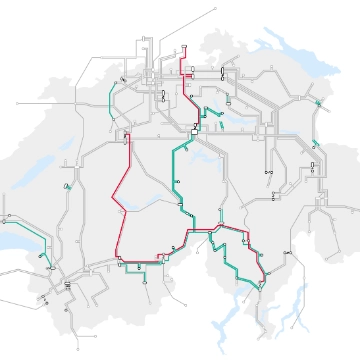
In April 2025, Swissgrid published the Strategic Grid 2040, presenting a clear plan for the grid of the future. Swissgrid has identified 31 significant grid projects that must be implemented by 2040. Swissgrid is preparing the transmission grid for the energy future with investments totalling around CHF 5.5 billion to reinforce 400 kilometres of existing lines, build 790 kilometres of new lines and dismantle 790 kilometres of old lines.
Various grid projects reached important milestones in the reporting year. Swissgrid obtained the construction permit for the 220-kilovolt line in the new Gotthard Road Tunnel, for example. This will allow two relevant national infrastructures to be bundled. Swissgrid will also dismantle the existing line over the Gotthard Pass. Another example is the modernisation of the Bonaduz substation, where Swissgrid’s specialists put a new transformer into operation, further strengthening security of supply in Switzerland. However, the expansion and modernisation of the transmission grid is progressing slowly due to lengthy approval processes. The «Grid express» bill, which is currently being deliberated on by the Federal Assembly, is an important step towards speeding up these processes.
Grid operation and innovation: using control energy from PV systems for greater stability
The transformation of the energy system is making grid operations more difficult. Swissgrid has therefore been pushing ahead with various important innovations. One of them is the PV4Balancing pilot project, which aims to use the flexibility potential of photovoltaic plants to stabilise the grid in the future. Photovoltaic plants will supply control energy and make an active contribution to grid stability.
In addition, software developed in-house at Swissgrid is helping to make the best possible use of control energy in daily grid operations. Supported by artificial intelligence, the system forecasts control energy deployment and automatically activates the best control energy product up to a certain threshold. The AI solution saved around EUR 20 million in control energy costs in the reporting year, thereby also increasing the efficiency of transmission grid operations. This represents another step by Swissgrid in its ongoing efforts to keep costs for electricity consumers as low as possible.
An electricity agreement for a secure supply of electricity
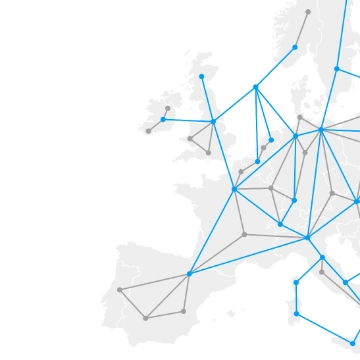
Switzerland generates too little electricity in the winter and is dependent on imports. In the summer, on the other hand, generation is often higher than consumption, and Switzerland exports electricity. This electricity exchange requires certainty as far as capacities on cross-border lines are concerned. An electricity agreement would guarantee these capacities. What is more, an electricity agreement would allow Swissgrid to procure control energy on the corresponding European platforms. This would strengthen secure grid operation and competition, as these platforms are larger and more liquid than a national market. Acceptance of the electricity agreement would therefore reduce the costs for grid stability, facilitate the secure and stable operation of the grid and guarantee Switzerland’s security of supply with regard to electricity.
Climate targets along the value chain
Swissgrid improved several relevant sustainability ratings in the reporting year. This underlines the consistent implementation of its sustainability strategy and successful further development in this area. In addition to the existing net-zero targets (Scope 1 and 2), Swissgrid defined further science-based climate targets for indirect emissions (Scope 3) and drew up an appropriate decarbonisation plan. As a result, Swissgrid is not only making a contribution to the climate-friendly transformation of the energy system, but is also taking responsibility for reducing greenhouse gases along its own value chain.
Company performance remains stable
Swissgrid generated net income of CHF 91.7 million in the 2025 financial year (2024: CHF 103.8 million). The lower net income is due to the regulatory requirement to reduce deficits and the resulting lower interest on volume- and tariff-related timing differences. The Board of Directors proposes to the Annual General Meeting that a dividend of CHF 45.8 million be distributed (2024: CHF 51.9 million).
Swissgrid continued to invest consistently in the modernisation and further development of the transmission system. Investments totalled CHF 356.6 million in the reporting year (2024: CHF 323.7 million). Of this, CHF 281.2 million was channelled into grid expansion (2024: CHF 256.3 million) and CHF 15.3 million went towards maintenance (2024: CHF 14.3 million).
Procurement costs, excluding the power reserve and solidarised costs, decreased to CHF 462.6 million (2024: CHF 684.5 million). This was mainly thanks to optimised procurement processes and the use of the «Optimizer Autopilot» AI solution for control energy, which resulted in lower costs for active power loss procurement and control energy. The costs for control energy (procurement costs: CHF 177.3 million) are passed on to the balance groups (revenue: CHF 295.8 million). As expected, the lower tariffs for the transmission grid in the 2025 financial year led to a decline in net turnover to CHF 1,481.6 million (2024: CHF 1,825.1 million), excluding the power reserve.
The procurement costs for the tasks transferred to Swissgrid by the federal government amounted to CHF 205.1 million (2024: CHF 186.5 million) for the power reserve and CHF 103.2 million for solidarised costs, including costs for grid enhancements and state aid for the steel and aluminium industries.
Swissgrid’s net income is generated in a highly regulated business model and is largely dependent on the WACC for grid operators determined by DETEC, which is why Swissgrid expects the 2026 result to be slightly lower than in the reporting year.