The energy transition is transforming the Swiss electricity system. More and more electricity is being generated from renewable sources and has to be transported over long distances. At the same time, the transmission grid needs to be developed as efficiently as possible.
That is why Swissgrid is constantly evaluating new technologies. One of these is now being used in the Swiss transmission grid for the first time: High-Temperature Low-Sag conductors, known as HTLS conductors. The latest generation of these conductors has an exceptionally lightweight carbon core made up of several individual strands. In the pilot project on the 220-kilovolt line between Mühleberg and St. Triphon, Swissgrid is testing technological advances in live conductors that increase the transport capacity on existing routes without the need to erect new electricity pylons.
More power on existing grid infrastructure
The expansion of the electricity grid follows the NOVA principle: grid optimisation before grid enhancement before grid expansion. Before new infrastructure is built, existing systems should be used as efficiently as possible.
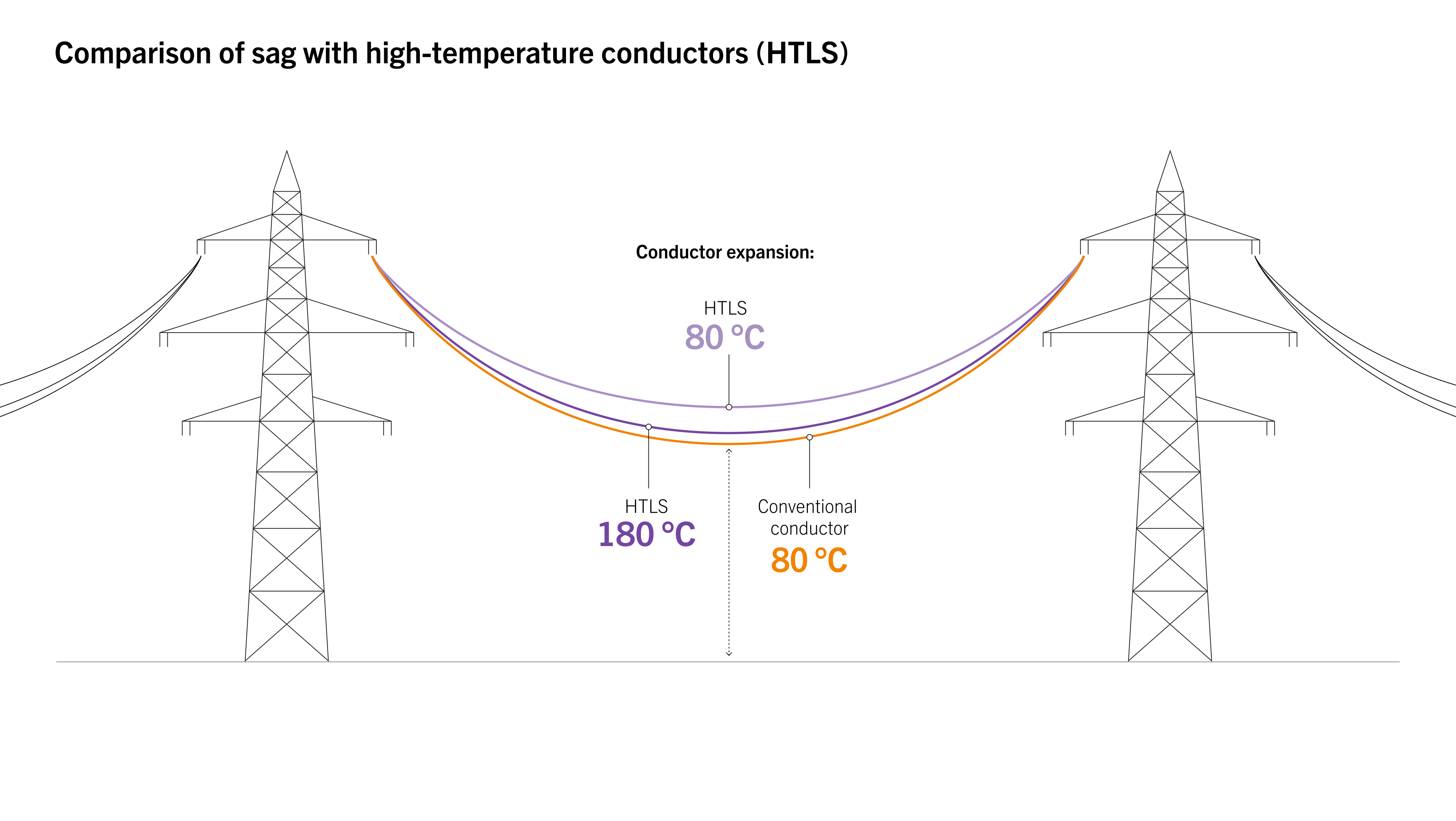
This is exactly where HTLS conductors come in. Compared with conventional aluminium conductors, they can withstand much higher temperatures and therefore carry more electricity. At the same time, their special carbon core ensures that they are lighter than existing conductors and expand much less when exposed to heat.
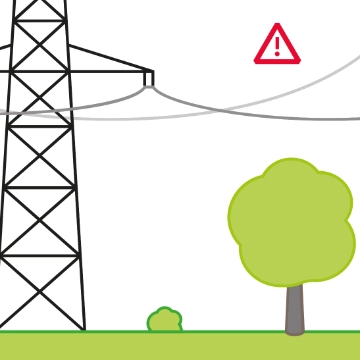
As a result, despite being subjected to higher loads, the conductors sag less and are able to maintain the required safety distances between the live conductors and the ground more effectively. For Swissgrid, this opens up new opportunities to increase the efficiency of existing lines while continuing to utilise the existing grid infrastructure.
Pilot project with a European dimension
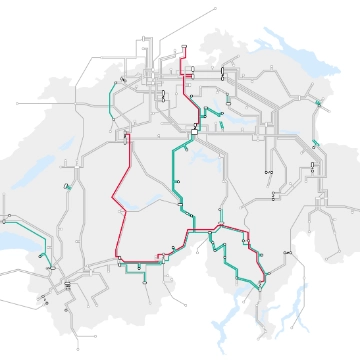
The conventional conductors are being replaced by HTLS conductors on the section of line between Mühleberg and St. Triphon which runs from Villars-sous-Mont (canton of Fribourg) to St. Triphon (canton of Vaud), which is approximately 35 kilometres long.
The project consists of:
- a route length of around 35 kilometres
- 110 pylons
- around 210 kilometres of conductors on Swissgrid’s 220-kV line
- additional retrofitting of the Romande Energie distribution line on the same pylons
Once it has been commissioned, this will be the longest continuous section of line in the European transmission grid to feature the latest generation of HTLS conductors. The Federal Inspectorate for Heavy Current Installations (ESTI) has already approved the project. The construction work is expected for 2027 and 2028.
Greater capacity for secure grid operation
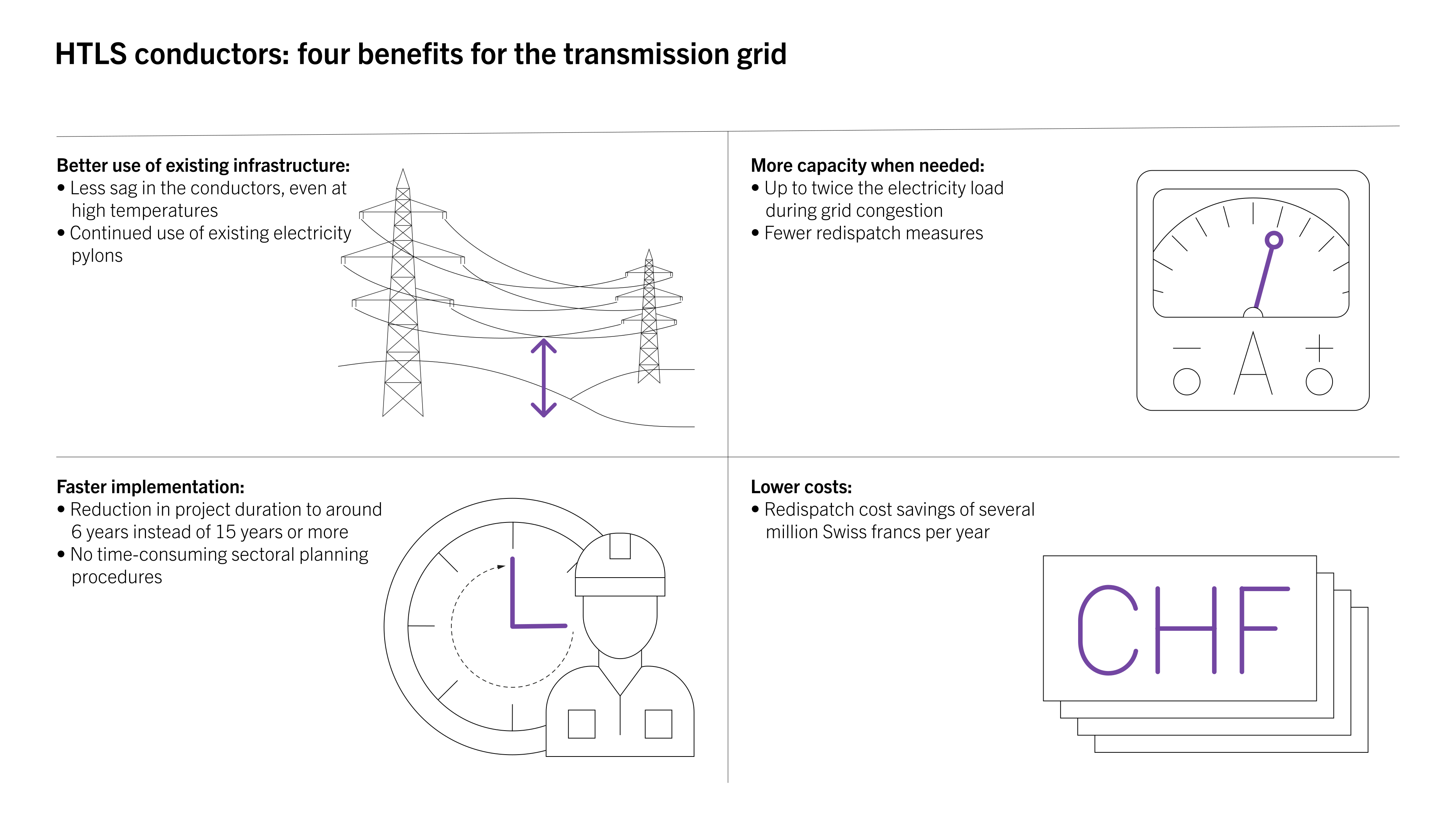
The new technology significantly increases the line’s current-carrying capability. Under normal operating conditions, the same amount of electricity flows through the line. However, there are additional reserves that can be utilised in exceptional circumstances; for example, if another line fails unexpectedly, the line fitted with HTLS conductors can carry a load up to twice as high, thereby guaranteeing secure grid operation. Another advantage is that thanks to their carbon core, HTLS conductors expand much less than conventional conductors when heated. This ensures that sag remains minimal even under heavy loads, making it easier to maintain the required safety distances between the live conductors and the ground.
This gives the grid control room additional scope to manage electricity flows flexibly and to control grid congestion. This makes it possible to reduce costly redispatch measures. Redispatch means that power plants must be deliberately ramped up or down to prevent individual grid elements from becoming overloaded. Depending on the grid situation, redispatch costs amounting to several million Swiss francs a year can be saved. HTLS conductors therefore provide additional reserves precisely where they are needed during grid operations.
Fewer grid interventions, lower costs
This technology is particularly useful in areas where the existing transmission grid is reaching its technical limits. The pilot project for the 220-kV Mühleberg – St. Triphon line has shown that if conventional conductors had been used, numerous pylons would have had to be reinforced or replaced. By using HTLS conductors, the existing pylons can, for the most part, remain in use.
The benefits:
- no new pylons
- much fewer interventions in the landscape
- shorter planning and approval procedures
- lower construction costs
For the Mühleberg – St. Triphon pilot project, this results in savings of more than 40 million Swiss francs compared with a conventional solution. This represents savings of around one million Swiss francs per kilometre of line in this project.
Planning in five years instead of fifteen
The modernisation of the Swiss transmission grid is often a challenge not only technically, but also timewise. Due to complex planning and approval procedures, many modernisation projects today take longer than 15 years from the initial project studies to commissioning. HTLS conductors open up new possibilities for Swissgrid: existing pylons can continue to be used without the need for extensive new constructions. This means that projects can be carried out without time-consuming sectoral planning procedures. The duration of the Mühleberg – St. Triphon pilot project from the preliminary project phase to commissioning has been reduced to less than six years. This shows that technologies like these innovative HTLS conductors can help make the modernisation of the transmission grid faster and more efficient.
Another building block for the grid of the future
High-temperature conductors are no substitute for long-term grid expansion. New lines and grid enhancements will continue to be necessary in the «Strategic Grid 2040». However, the technology expands Swissgrid’s toolkit. It is particularly suitable in situations where existing lines can be upgraded efficiently.
The Mühleberg – St. Triphon pilot project will demonstrate the long-term potential of this new technology in the Swiss transmission grid. One thing is already clear: innovative solutions will play a key role in making the grid secure, efficient and sustainable so that it can meet the requirements of the energy future.
One thing is already clear today: innovative solutions will play a key role in making the power grid safe, efficient and sustainable, meeting the demands of the energy future.
How do high-temperature conductors work?
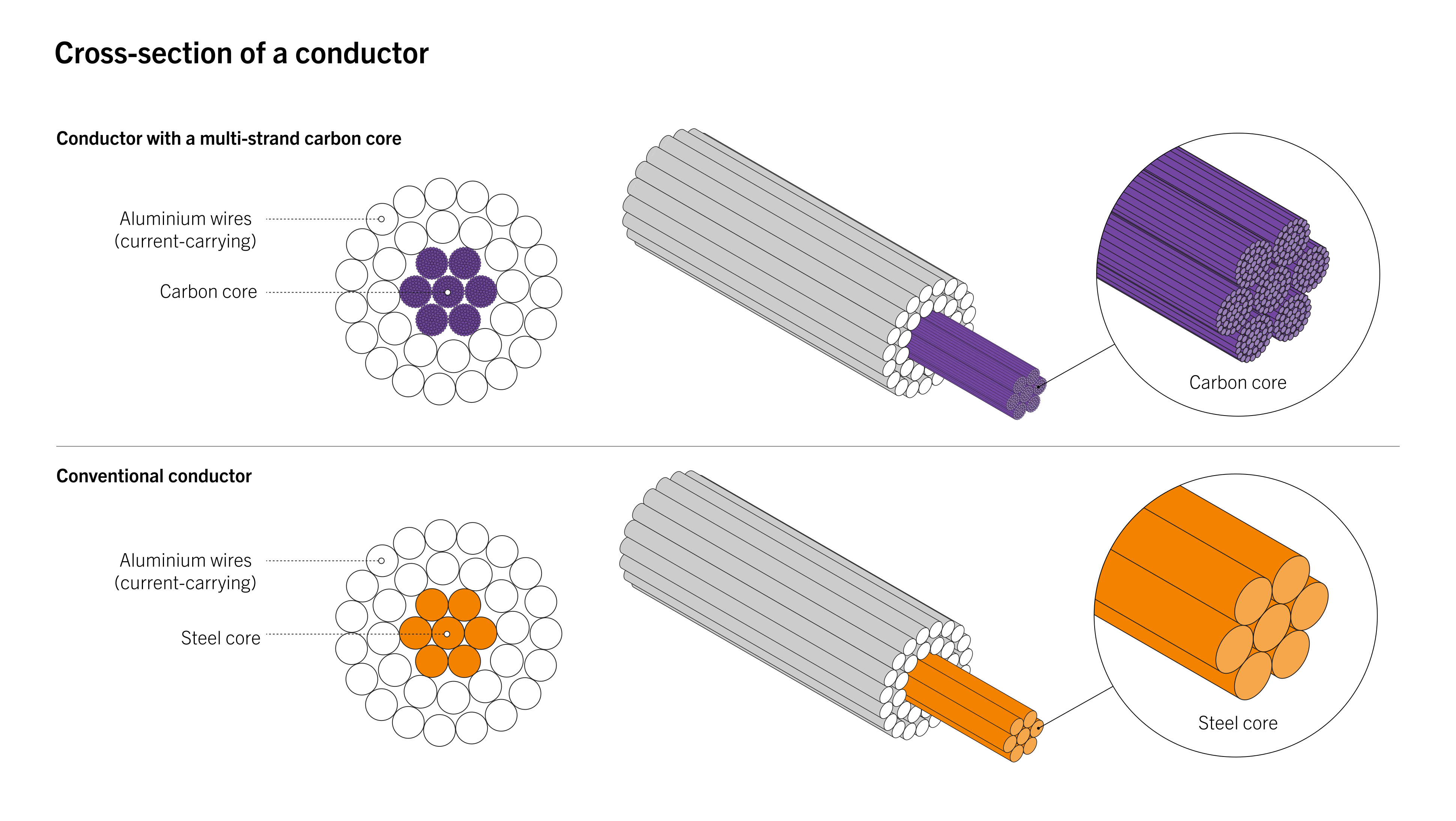
HTLS stands for High Temperature Low Sag. Conventional conductors are made of an aluminium alloy with a steel core. If the electricity load increases, the live conductor heats up. This causes it to expand and sag more. By contrast, this latest generation of HTLS conductors tested in the pilot project uses a very lightweight multi-strand carbon core consisting of seven individual strands and wedge-type tension clamps. This conductor is much more heat-resistant and does not expand. Whereas conventional conductors are designed for operating temperatures of a maximum of 80°C, HTLS conductors can withstand temperatures of up to 180°C and above.
This allows the conductors to:
- cope with higher temperatures
- transport more electricity (HTLS)
- observe the applicable minimum distances from the ground more effectively (HTLS)
- be fitted to existing pylons
- minimise the impact on people, the environment and nature
In Swissgrid’s pilot project, these conductors allow the technical reserves to be increased from around 820 amps to up to 1,200 amps without the need to reinforce the electricity pylons. This is equivalent to the additional capacity of a large run-of-river power station, such as one on the Rhine.
Author