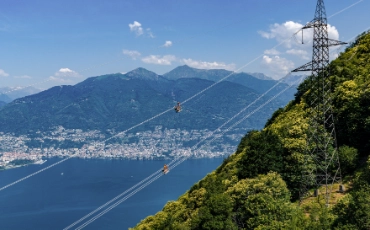
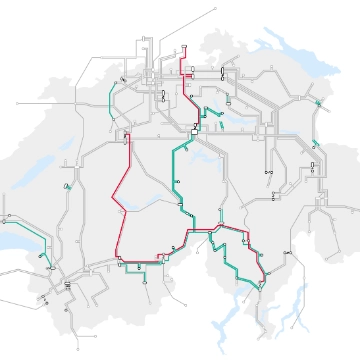
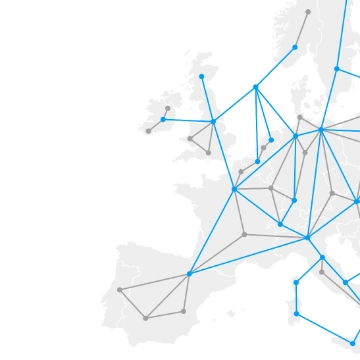
Swissgrid’s transmission system covers around 6,700 kilometres across Switzerland. Approximately 22% of the lines run through or over woodland. To ensure that forests and lines do not interfere with one another, Swissgrid monitors the vegetation along its infrastructure and takes targeted action where necessary.
Why are trees dangerous?
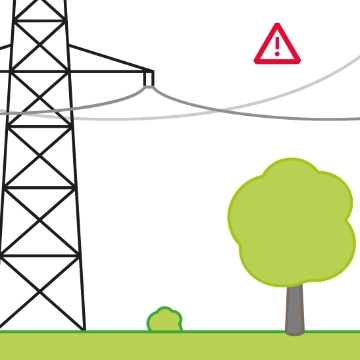
Trees near power lines can pose a risk, for example if branches or whole trees are in danger of falling onto the lines and damaging them. This can lead to electric arcs, which in turn can cause forest fires and result in widespread damage to the environment and infrastructure. In the case of high voltages, simply coming close to the conductor is enough. Although this type of damage does not automatically result in a supply disruption (due to the N-1 principle, read more here), it cannot be ruled out entirely. To ensure the safety of people, the environment and infrastructure, and to prevent incidents of this kind, Swissgrid manages the forests near its lines in collaboration with the cantonal forestry authorities and regional forestry enterprises and operations.
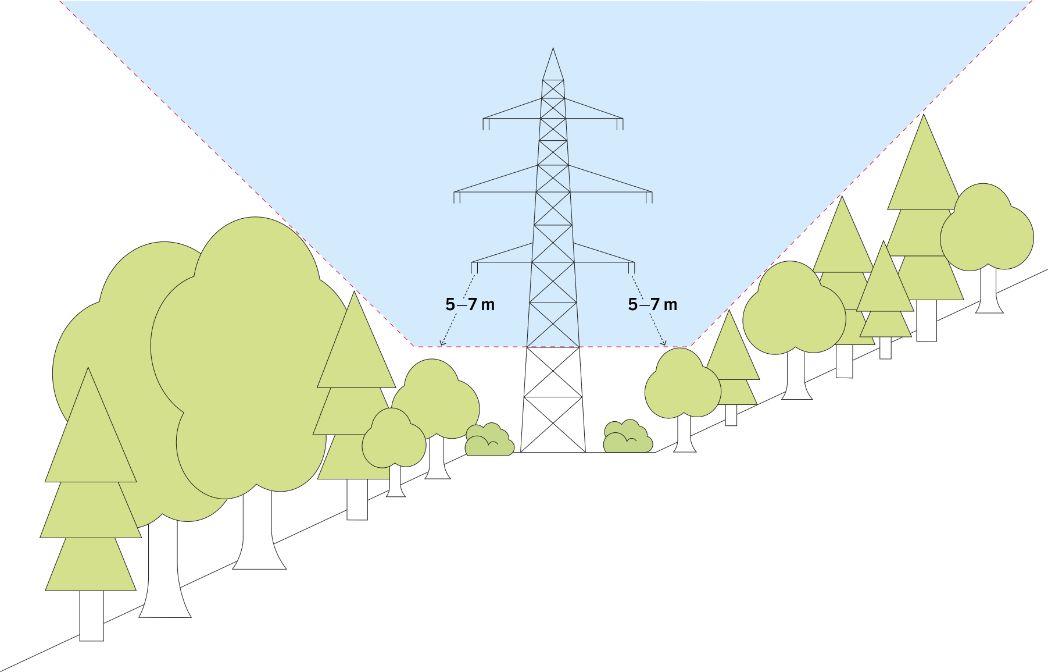
Most of the Swiss transmission grid was built more than 60 years ago. Since then, there have been considerable changes in the environment surrounding the lines and in the climatic conditions. Consequently, active forest management has also become more important. Swissgrid does not decide on its own which trees may become a risk and need to be cut back. The distances from the treetops to power lines vary depending on the voltage of the line and are defined in the Ordinance on Electrical Lines and Cables (OLE). The required clearance is 5 metres for 220-kV lines and 7 metres for 380-kV lines, including a Swissgrid clearance allowance.
«Our aim is to reconcile the requirements of security of supply with the needs of our forests and nature. That’s why we take targeted measures in line with the principle: as little as possible, as much as necessary.»
Marco Freda, forester at Swissgrid
What does Swissgrid do in terms of forest management?
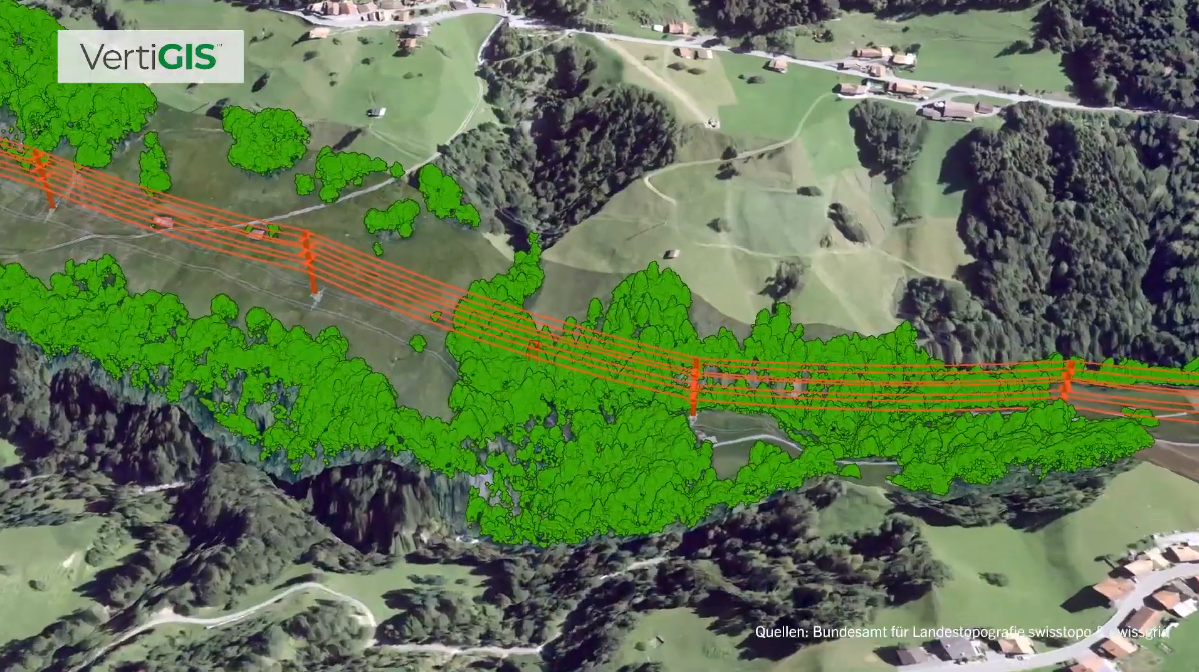
Swissgrid carries out long-term monitoring of the forests along its lines and analyses their development. It uses modern technologies as well as carrying out regular visual inspections. Measurements from LiDAR scans accurately determine the distances between vegetation and live conductors. In addition, the system calculates tree-fall curves for trees standing to the side of the lines in order to identify potential risks to the lines.
However, the evaluation of forest edges is not based solely on this data. Other on-site factors such as the stability of the tree population, specific local conditions, natural hazards and biotic influences caused by fungi or harmful insects are also considered. In addition, contractual agreements with landowners are taken into account in the planning process. The aim of all these measures is to promote the long-term stability of forest areas while ensuring security of supply at the same time.
«The LiDAR scans are very detailed. We can almost count the needles on them.»
Gaëtan Grossrieder, forester at Swissgrid
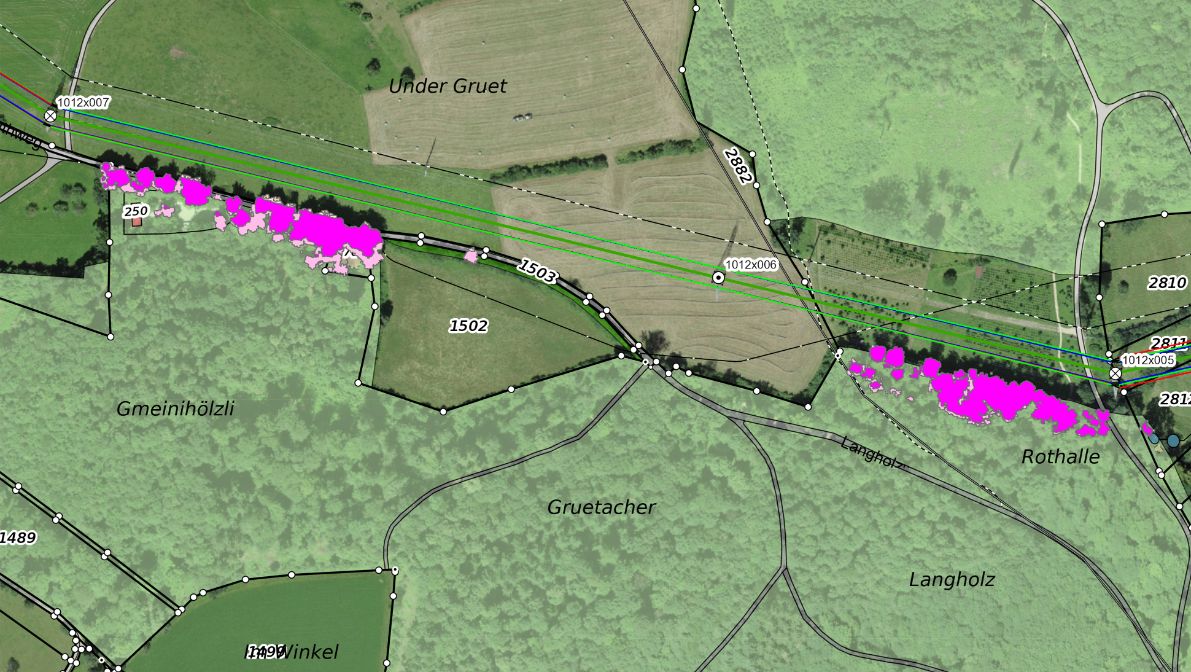
Swissgrid uses this data to plan the necessary measures relating to its infrastructure. As well as removing individual trees, this also involves the sustainable management of forest edges. The aim is to operate the infrastructure safely while ensuring its harmonious integration into the landscape. The forestry work itself is carried out in accordance with the strictest safety measures. The extra-high-voltage power lines generally remain in operation while work is taking place, provided that this is compatible with felling trees and removing timber. This means that it does not result in a supply disruption.
Who is responsible for forestry work at Swissgrid?
Swissgrid employs a total of six foresters who manage the vegetation in the vicinity of lines. They remain in close contact with the regional forestry authorities and coordinate their work jointly.
«In the forest, we rely on collaboration with local forestry enterprises, which have an in-depth understanding of local conditions and are familiar with the concerns of the forest owners and local authorities. In built-up areas, we work closely with specialised regional arborists. This local expertise is crucial for the safe and sustainable management of the areas along our lines.»
Marco Freda, forester at Swissgrid
Although Swissgrid’s foresters focus on the lines when carrying out their work, they also consider projects from the perspective of the forest. Anyone working near lines must understand both sides: the requirements of secure grid operations and the needs of the forest.