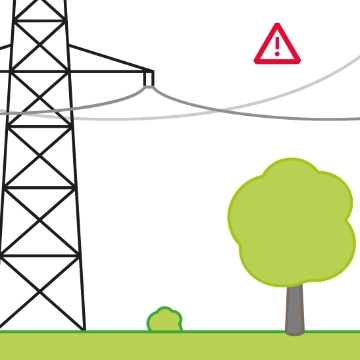
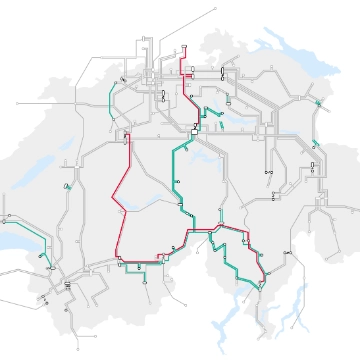
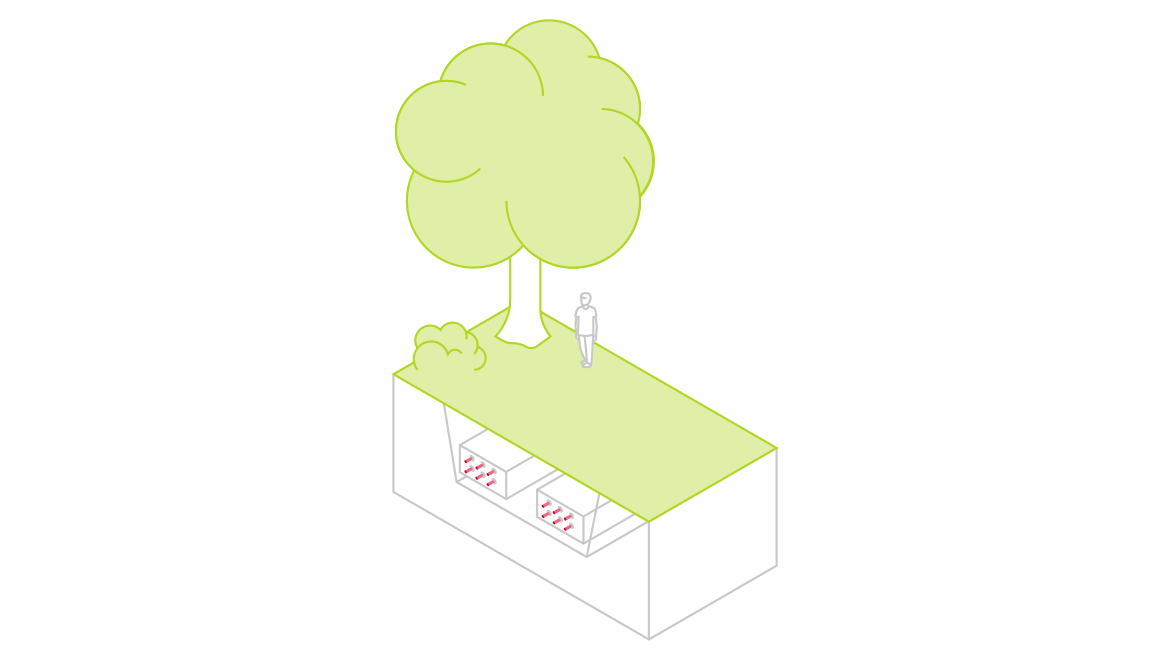
At extra-high-voltage level (380 kV and 220 kV), electricity is currently predominantly transported using overhead lines. They account for 99 percent of the Swiss transmission grid. The use of underground cables in the extra-high-voltage grid is comparatively new, and experience in the field is relatively limited. Both technologies have their advantages and disadvantages with regard to project planning, construction, operation and maintenance. That is why Swissgrid examines the overhead line and cabling options for every grid project.
Overhead lines
Swissgrid maintains 12,000 pylons in the extra-high-voltage grid throughout Switzerland. Many of them are located in challenging terrain: in mountainous, steep locations that are often difficult to access, on rocky, sometimes unstable ground. Building new lines on this type of terrain poses technical difficulties. To do so, Swissgrid can draw on a wealth of experience and technical expertise.
Underground cabling
As opposed to overhead lines, underground cabling has rarely been used at the highest voltage level in Switzerland until now. This is because its use is only possible under certain conditions. A number of critical factors, such as soil conditions, transmission capacity, route length, costs and line capacity utilisation need to be taken into account. Swissgrid laid extra-high-voltage cables for a 380-kilovolt line in the ground for the first time in 2019, thereby collecting important findings and data for the future.
Construction methods for line projects
Overhead line construction: stable foundations
1/3: The pylon of an extra-high-voltage line requires a maximum area of 15×15 metres. Its foundation is built solidly: it must not only support the pylon, but also ensure that it does not tip over in strong winds. Depending on the height of the pylon and the terrain – especially in the mountains, where pylons are often located on steep or unstable terrain – additional safety measures may be necessary. Structural measures such as metal nets or concrete reinforcements protect the pylons from avalanches, rockfalls or falling debris.
2/3: The electricity pylon constantly grows upwards during the installation work. For most pylon sites on steep terrain, helicopters transport the individual pylon elements from the installation sites to the pylon sites. For other pylons, the pylon parts are lifted up piece by piece using an assembly tower.
3/3: Once the pylon has been built, the conductors that will later transmit the electricity are attached to the insulators. First, a helicopter is used to suspend the preliminary cable. This is made of nylon to keep the weight as low as possible for aerial assembly work. The next step is to pull much heavier steel cables up along the preliminary cables. Then the conductors which will later transmit the electricity are installed.
Route construction: how a cable is laid in the ground
How are transmission lines laid underground? Which methods are suitable for which terrain – and how do they affect construction time, costs or load-bearing capacity? When planning lines, Swissgrid always looks for the best possible way to reconcile the four areas of economic efficiency, technology, spatial development and the environment. The «Lines construction kit» is an important tool for finding solutions. It gives a precise description of the advantages and disadvantages of the various possible solutions whilst addressing the need to carefully weigh up all the construction options.
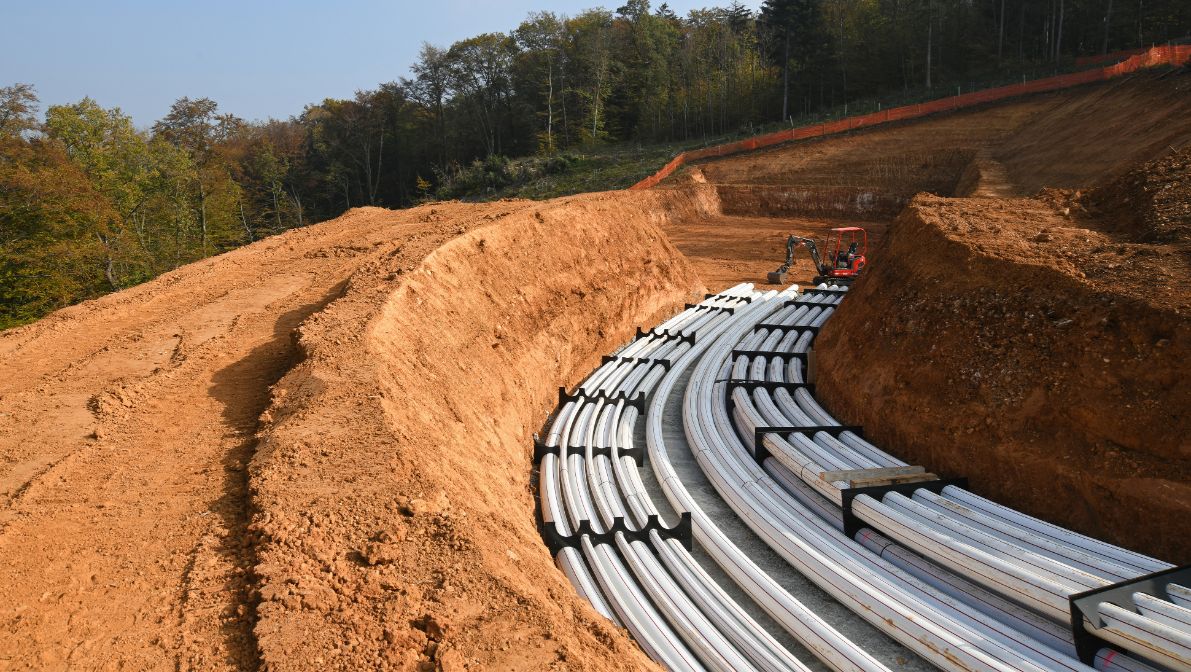
The simplest and most cost-effective construction variant. First, a cable trench is dug using an open construction method. Cable protection pipes are laid in the trench, concreted in and re-covered with earth. The cables are then pulled into the cable protection tubes.
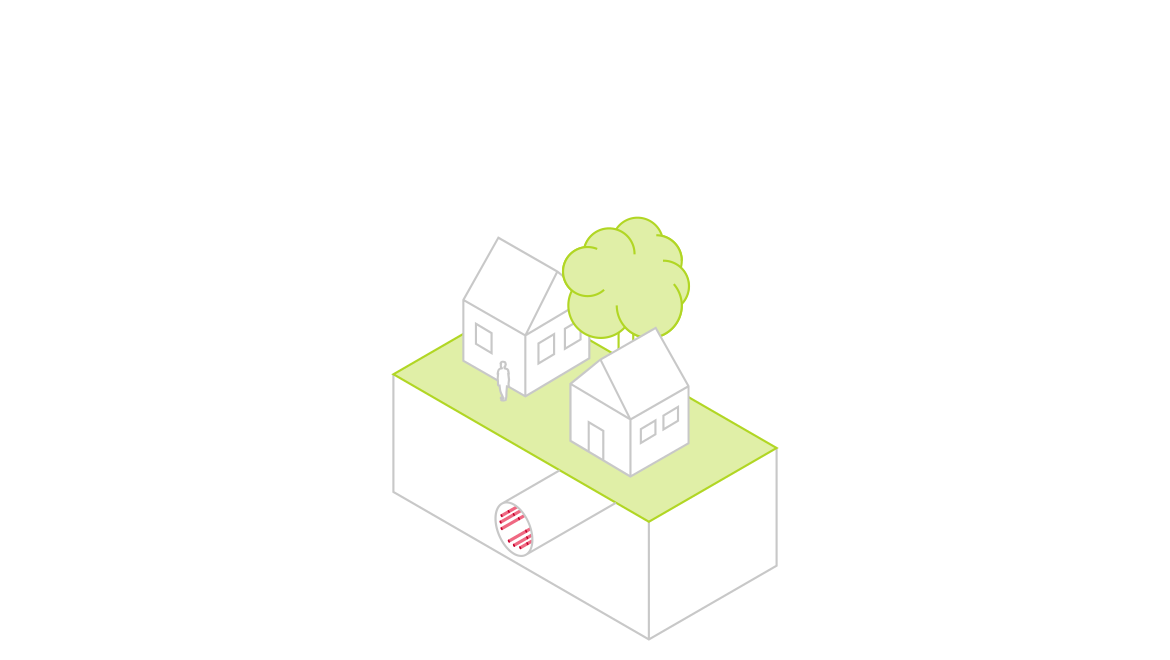
This method is chosen for rocky, mountainous terrain or for passing under obstacles such as residential areas or railway tracks. Accessible tunnels are built using tunnel construction or pipe jacking, and the cables are guided on special cable carriers. The tunnel profile is relatively large, which means that a considerable amount of material needs to be excavated.
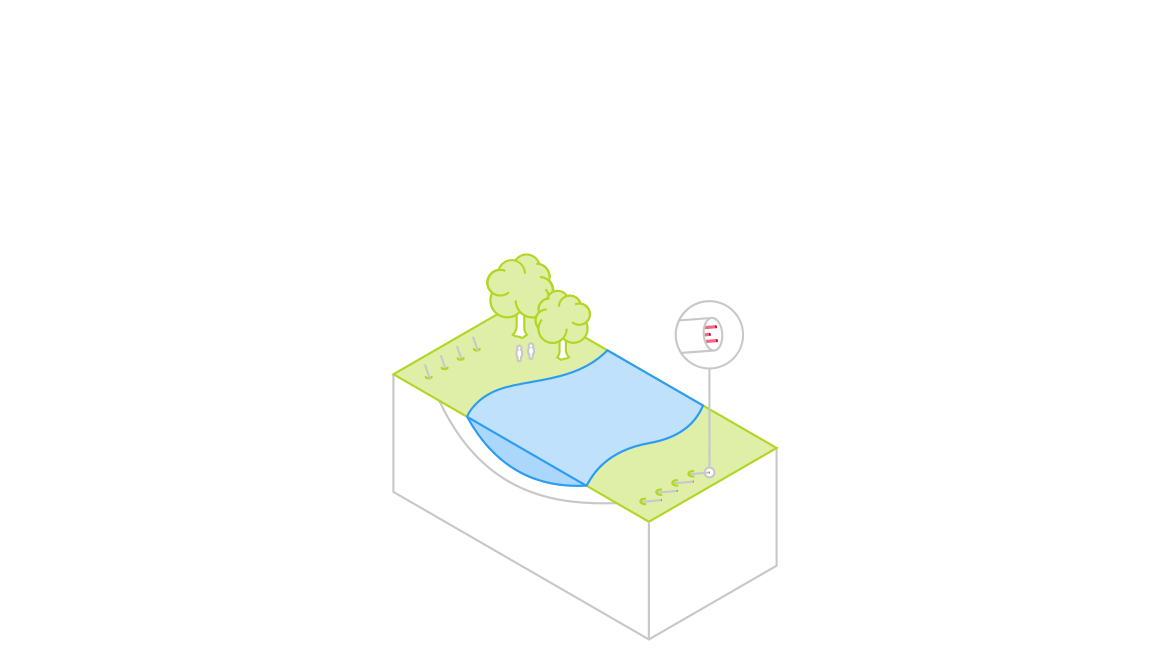
A direction-controlled drill head digs its way underneath obstacles such as bodies of water, roads or service lines. Stabilising liquid is pumped behind the drill head. Then empty conduits for the cables are laid.
Video «Gäbihübel» (in German)
Visible elements of underground cabling
Protecting the landscape is a major advantage of underground cabling. A large part of the line infrastructure is hidden in the ground. However, underground cables also leave traces in the landscape, for instance in the form of aisles in forests, access roads and transitional structures that connect overhead lines to the underground cables. Special shaft constructions are used to inspect and repair the cable connections. The voltage is stabilised with compensation systems. Other visible signs of underground cabling include access roads and forest aisles.
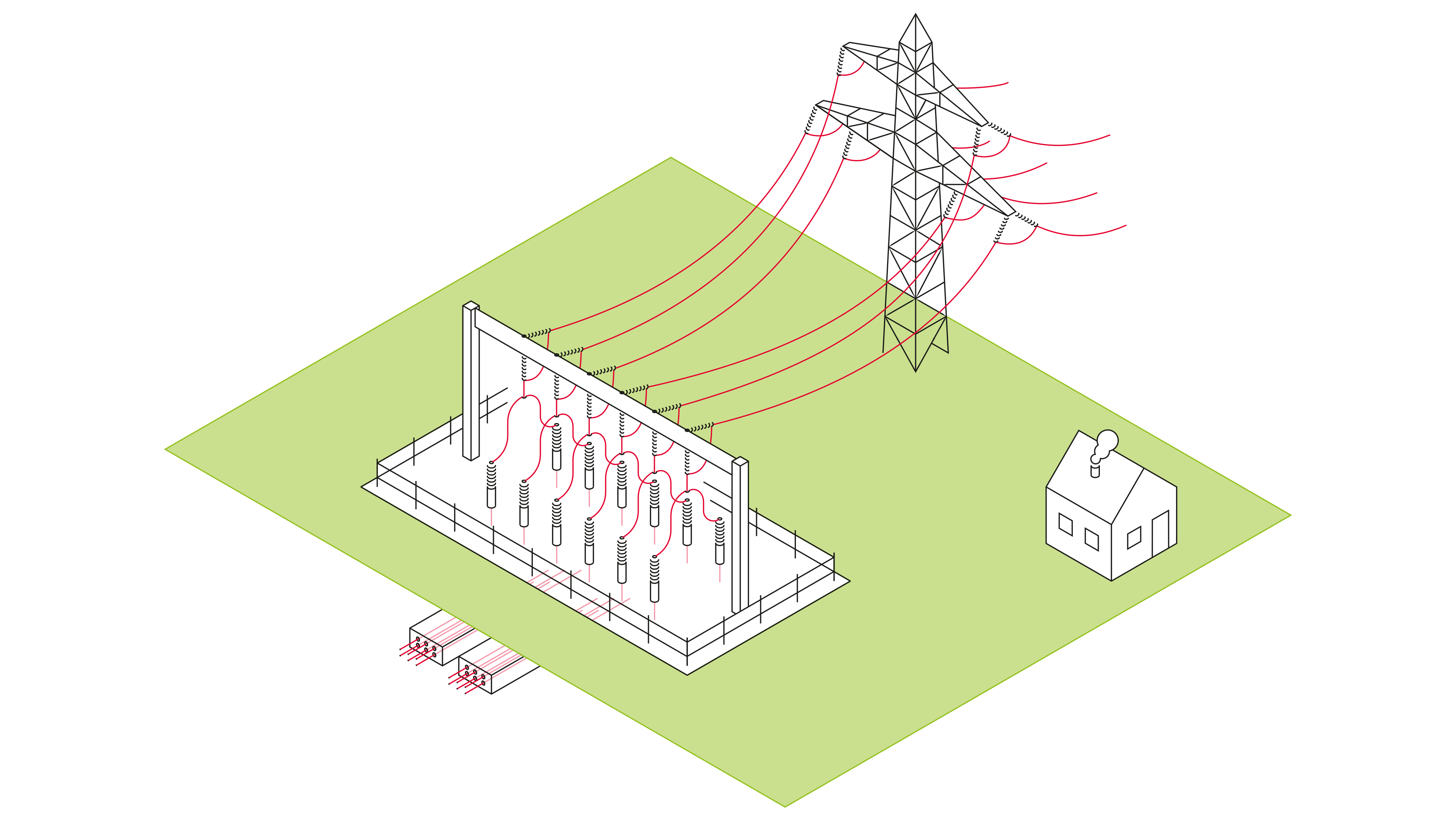
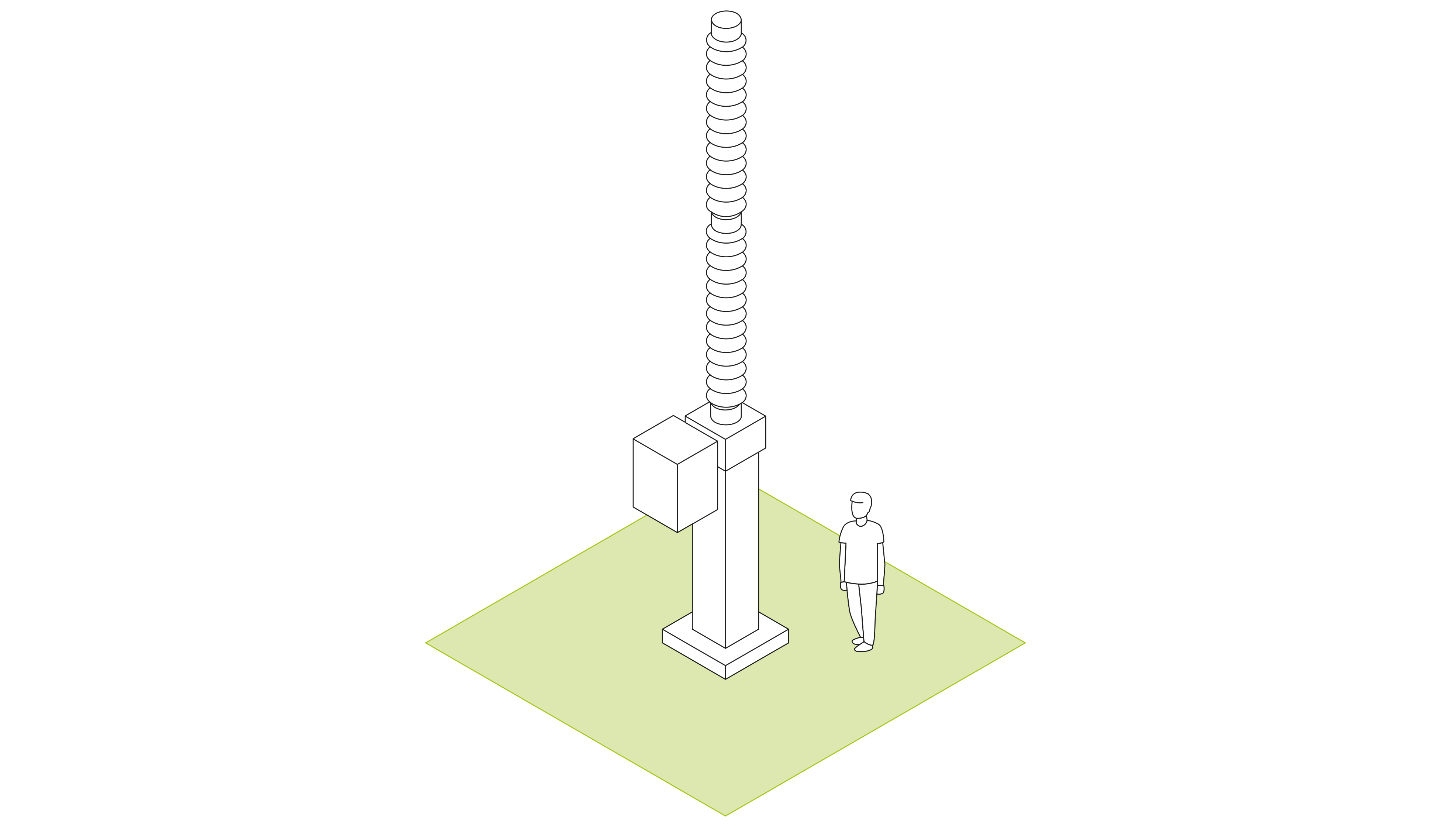
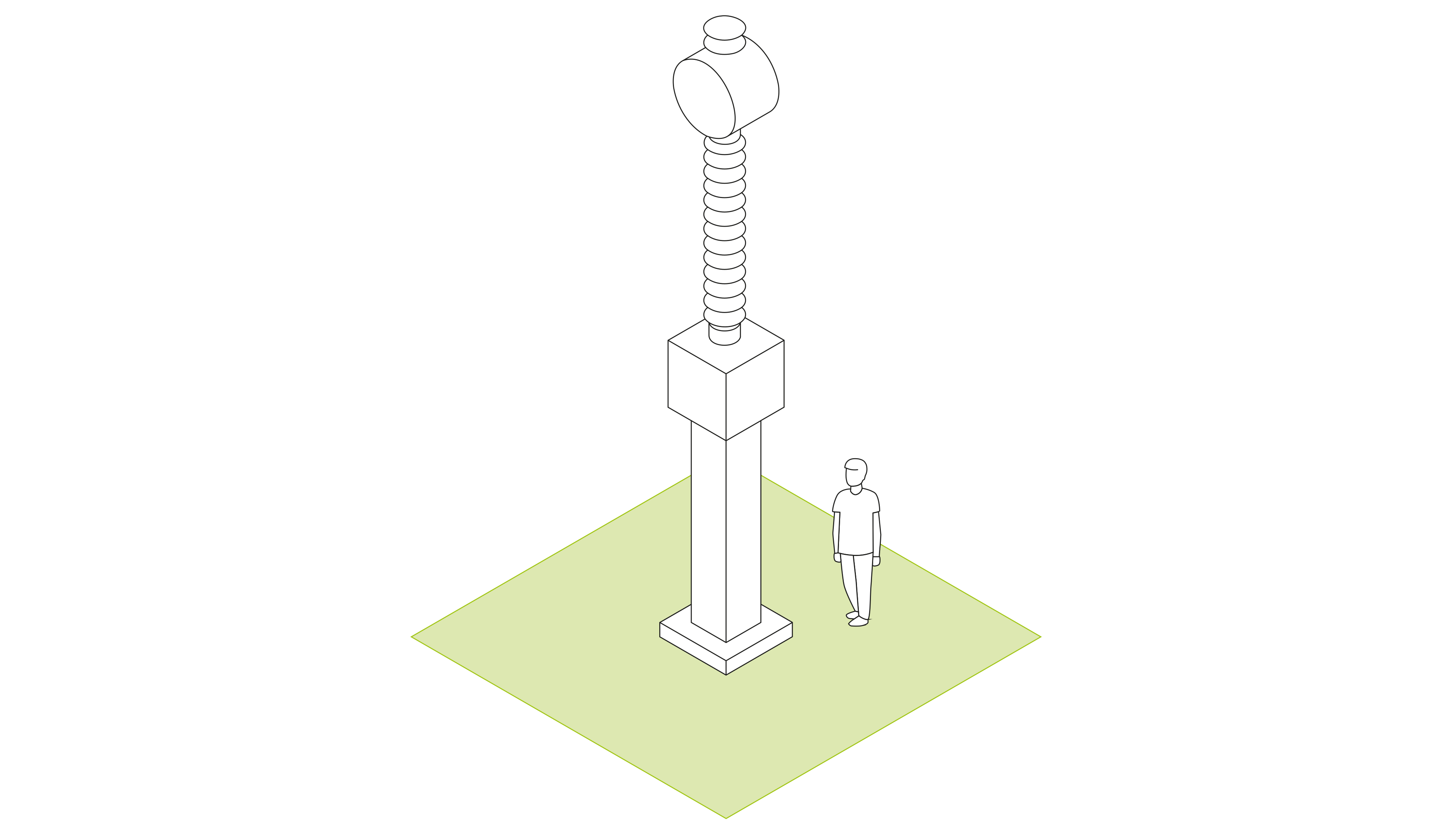
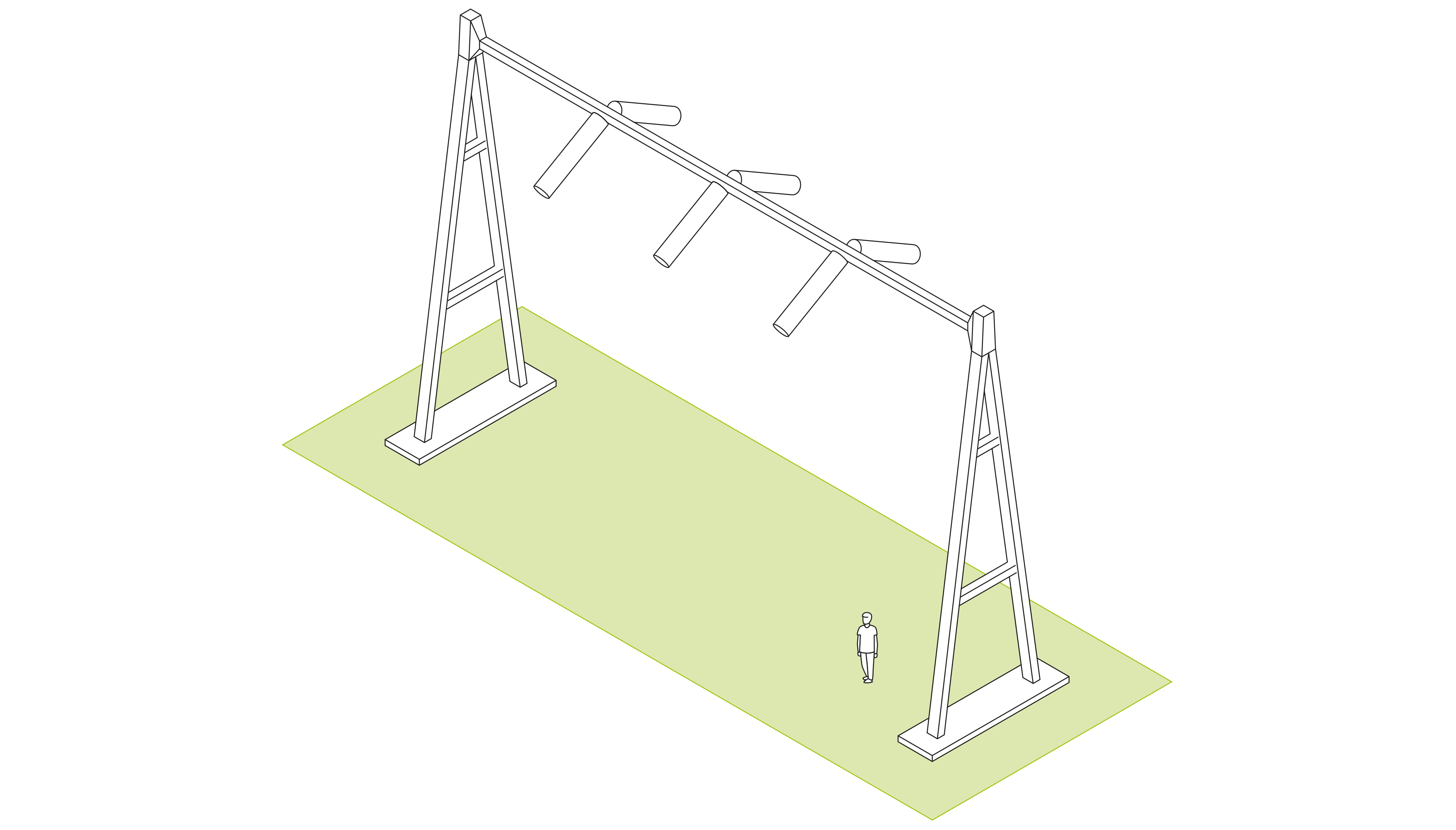
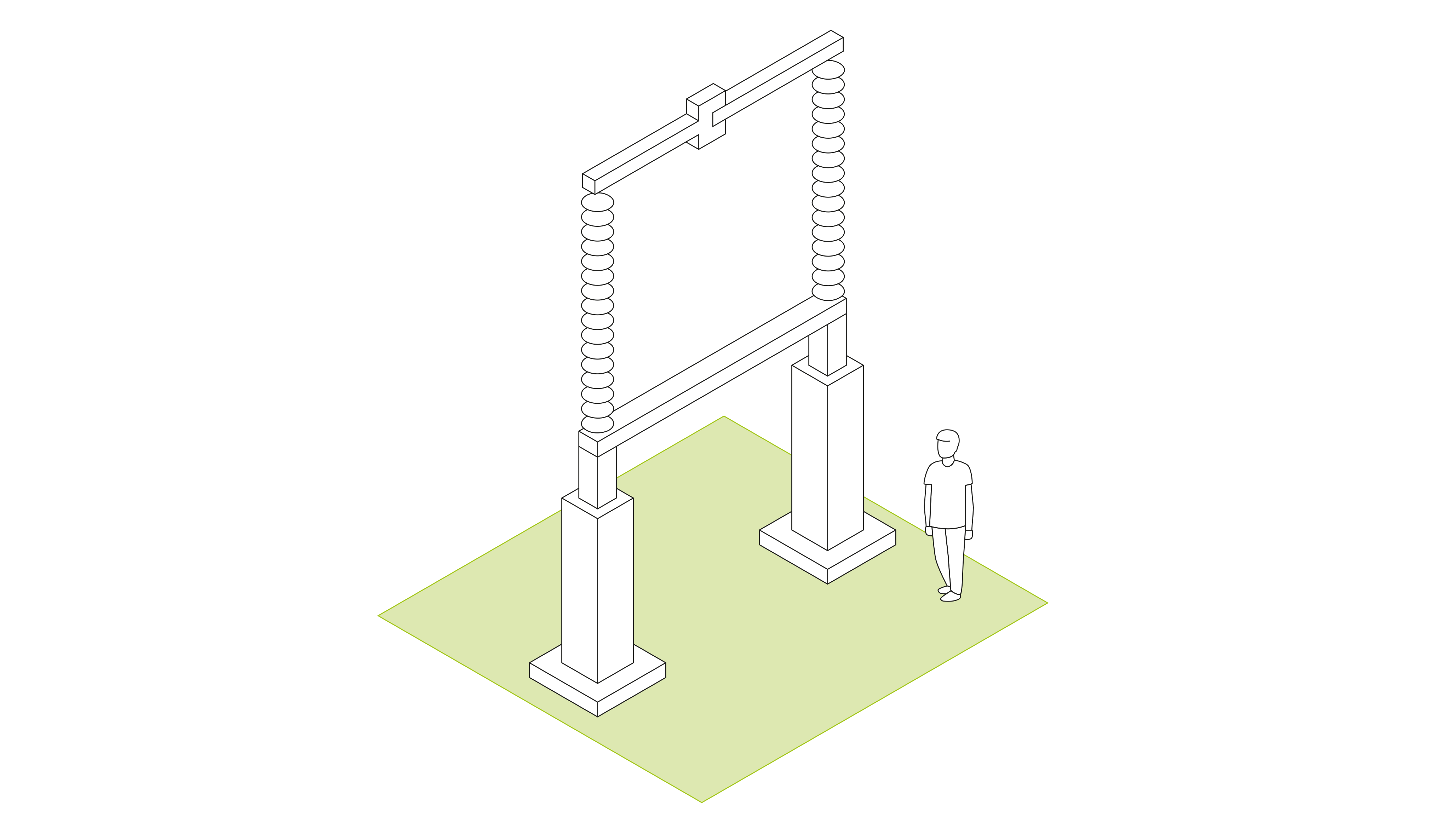
Transitional structures are required to connect the underground cables to the overhead lines. They stand out for the guyed scaffolds that protrude around 25 metres into the sky. They take the lines from the last pylon and connect them to the underground cables. Transitional structures require an area roughly the size of an ice hockey rink. When planning partial underground cabling, Swissgrid aims to integrate these structures into the landscape as inconspicuously as possible.
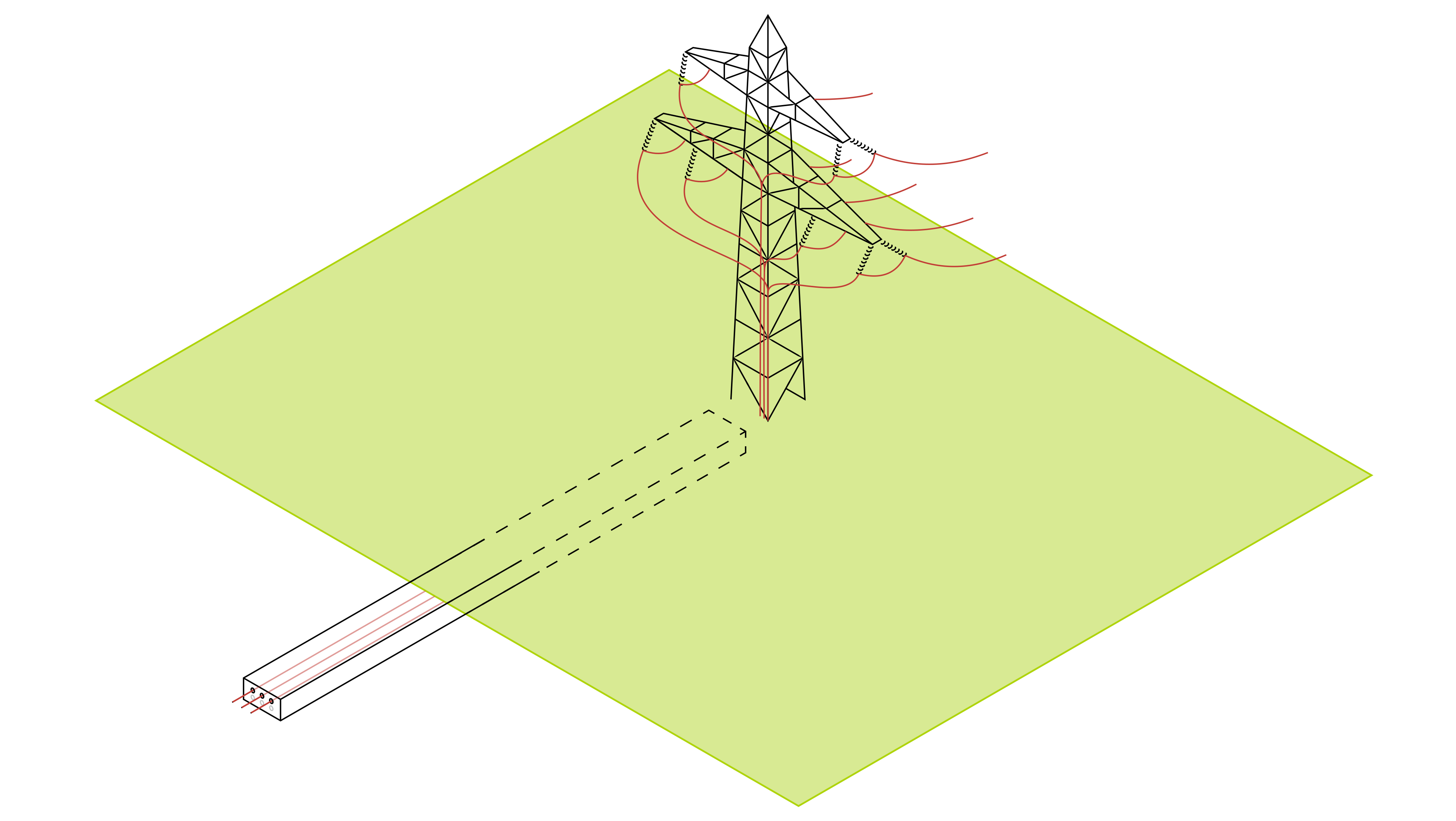
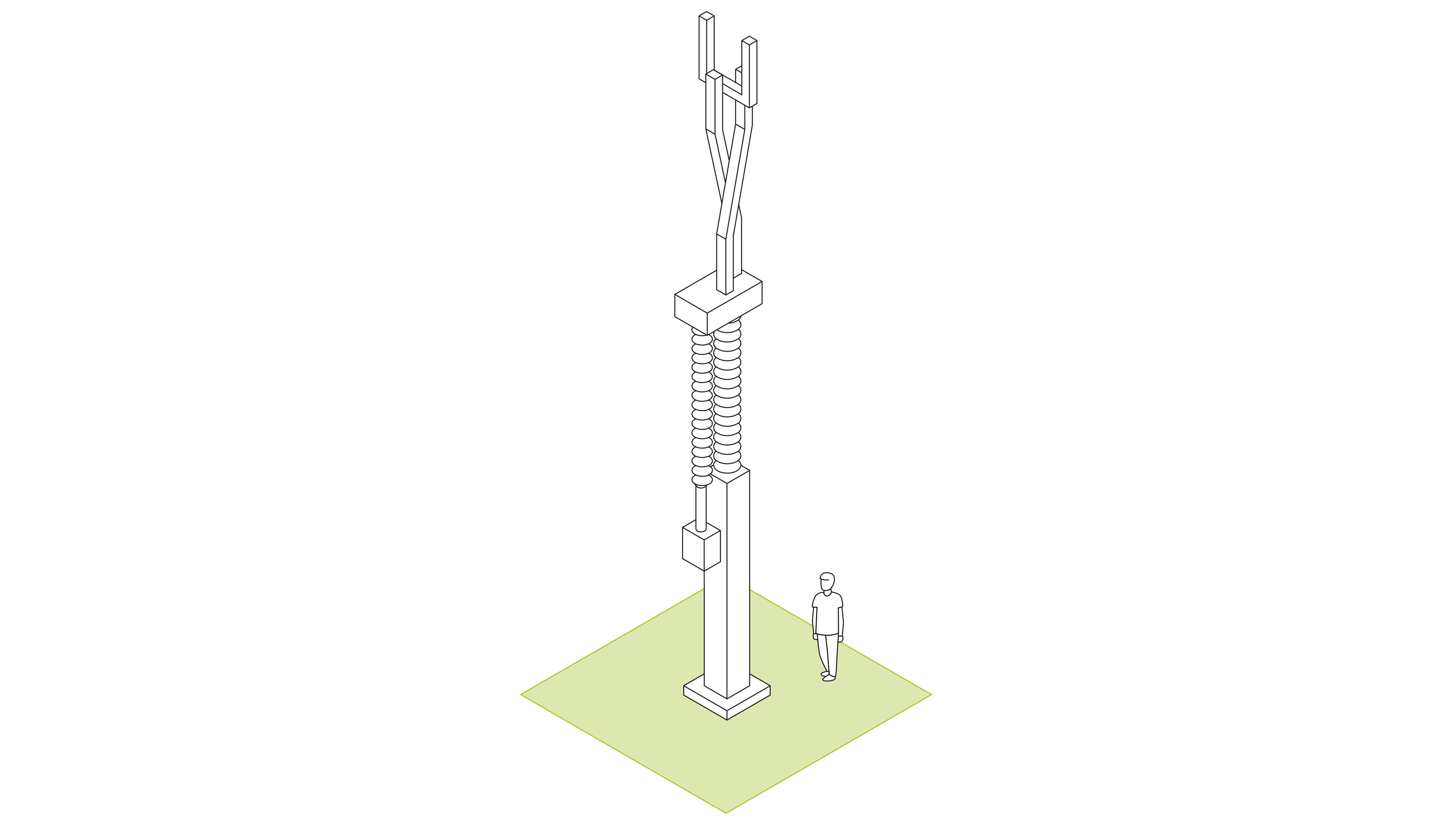
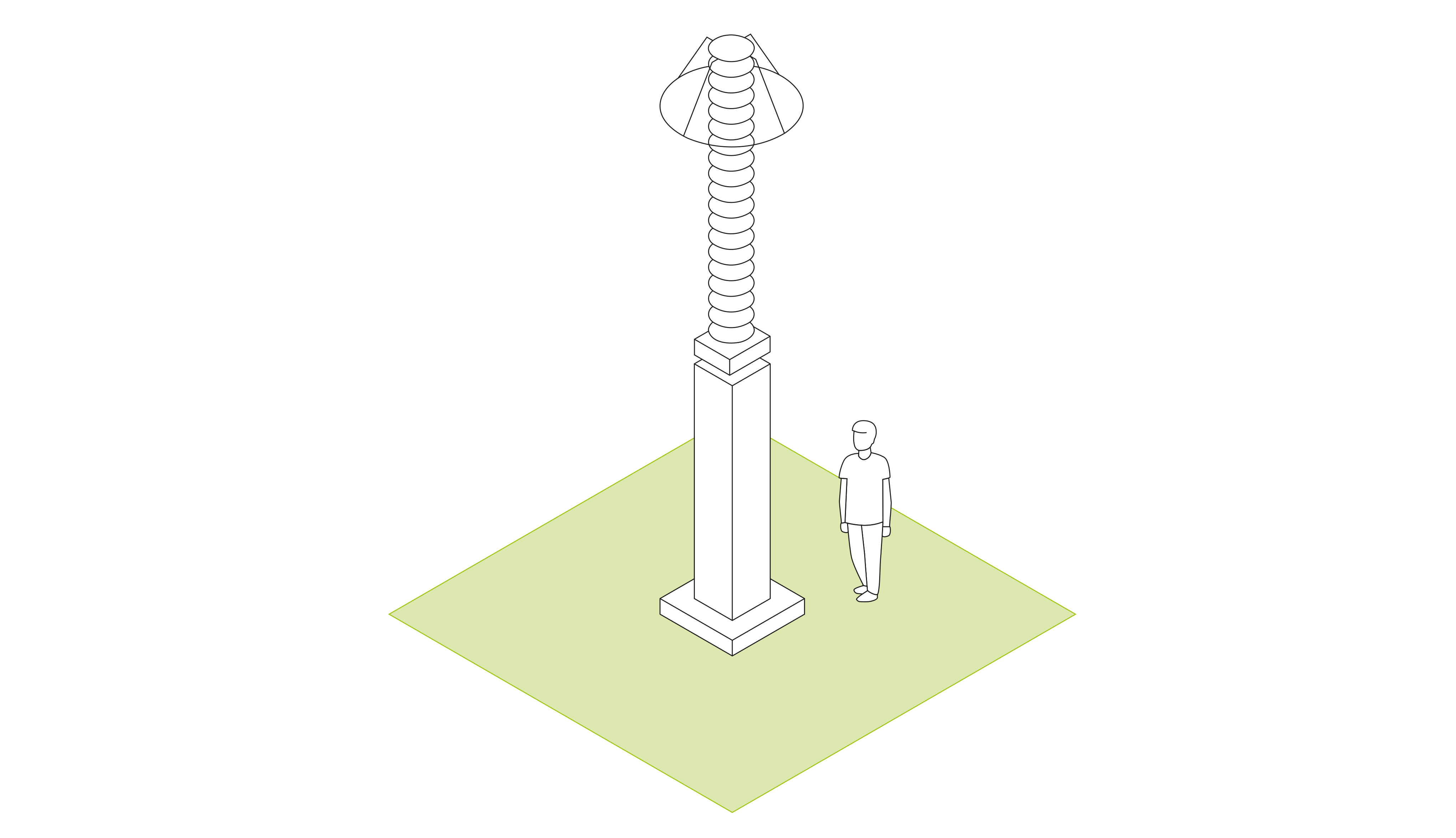
At the transition pylon, the line is routed from the underground section directly upwards onto the overhead line. Cable end pylons can be used for 220-kV lines in particular.
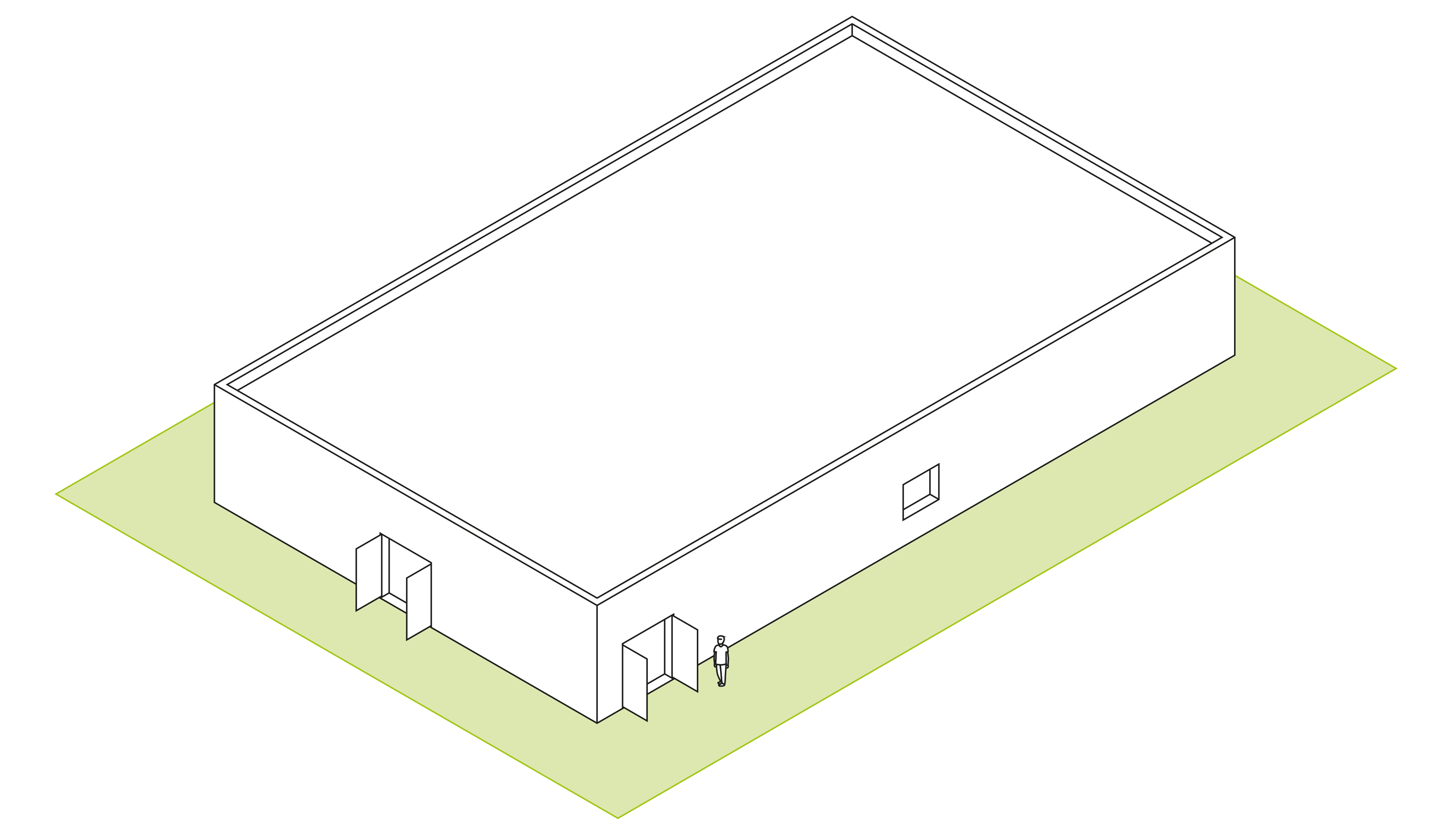
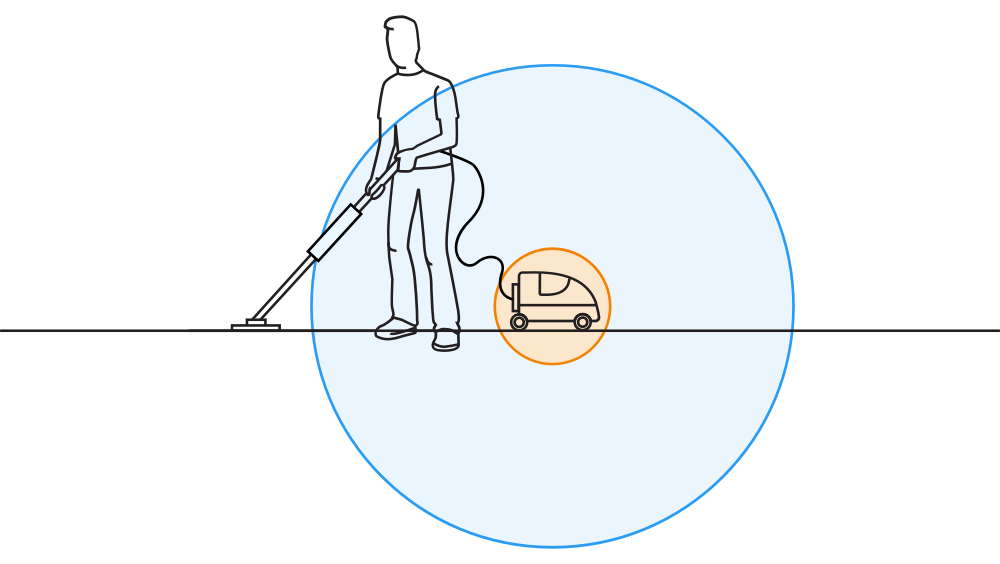
Underground cables increase the voltage in the grid more than overhead lines. Swissgrid needs to ensure that the voltage across the entire transmission grid does not become too high. Swissgrid can either instruct power plants to reduce the voltage or build compensation systems to do the same thing. These systems are positioned next to a transitional structure or a substation where possible, but in some cases also in open terrain. Depending on the power, a compensation system is roughly the size of a lorry.
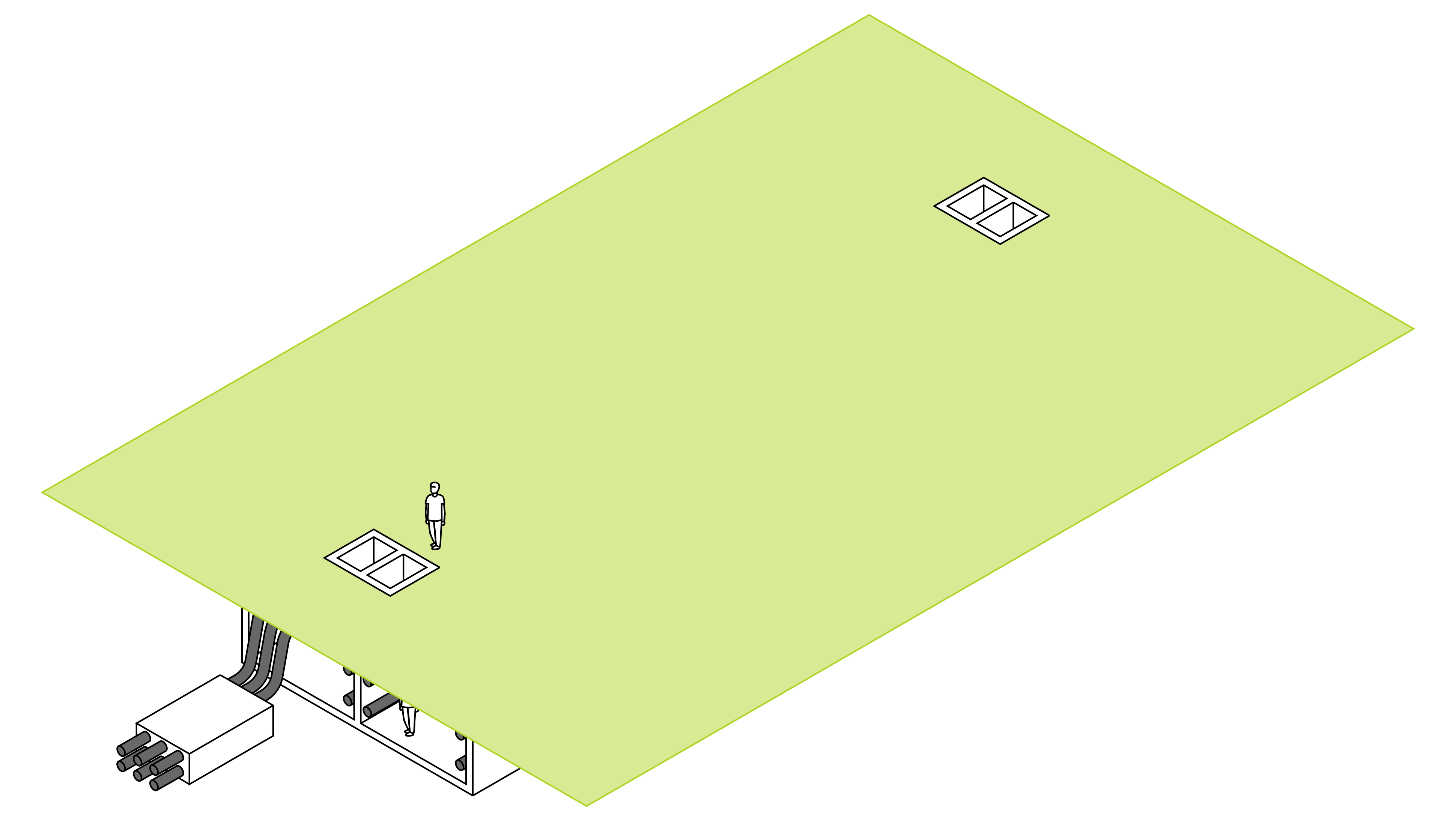
Extra-high-voltage cables laid in the ground consist of numerous layers. The resulting weight is considerable. This means that the cables can only be pulled into the cable conduit blocks in sections measuring approximately one kilometre in length. The cable sections are joined with special connectors called couplings. This is technically demanding, which is why couplings are relatively susceptible to faults – and need to be constantly accessible. Special coupling shafts are therefore installed for repair and assembly work. Special shafts are also required for the guide clamps – these clamps prevent the underground cables from slipping on steep hillsides.
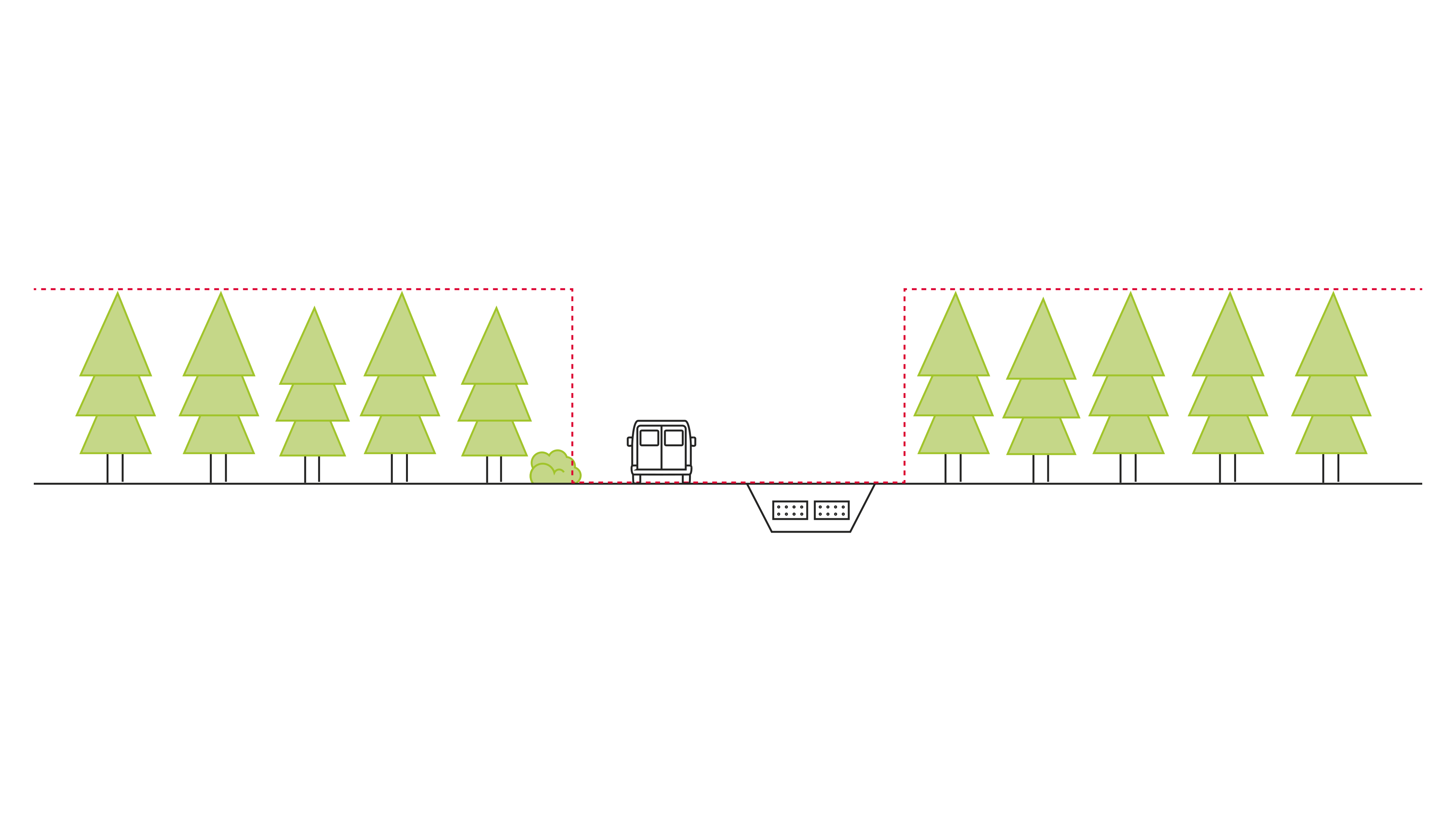
If underground cables cross forest areas, deforestation is necessary to create space for the construction of the cable trench. Some of these areas can be reforested once the construction work has been completed. However, as roots could cause damage, an aisle must be left permanently clear above the cable conduit blocks (as a clearance zone). Permanent deforestation is also necessary if transitional structures are built in the forest.
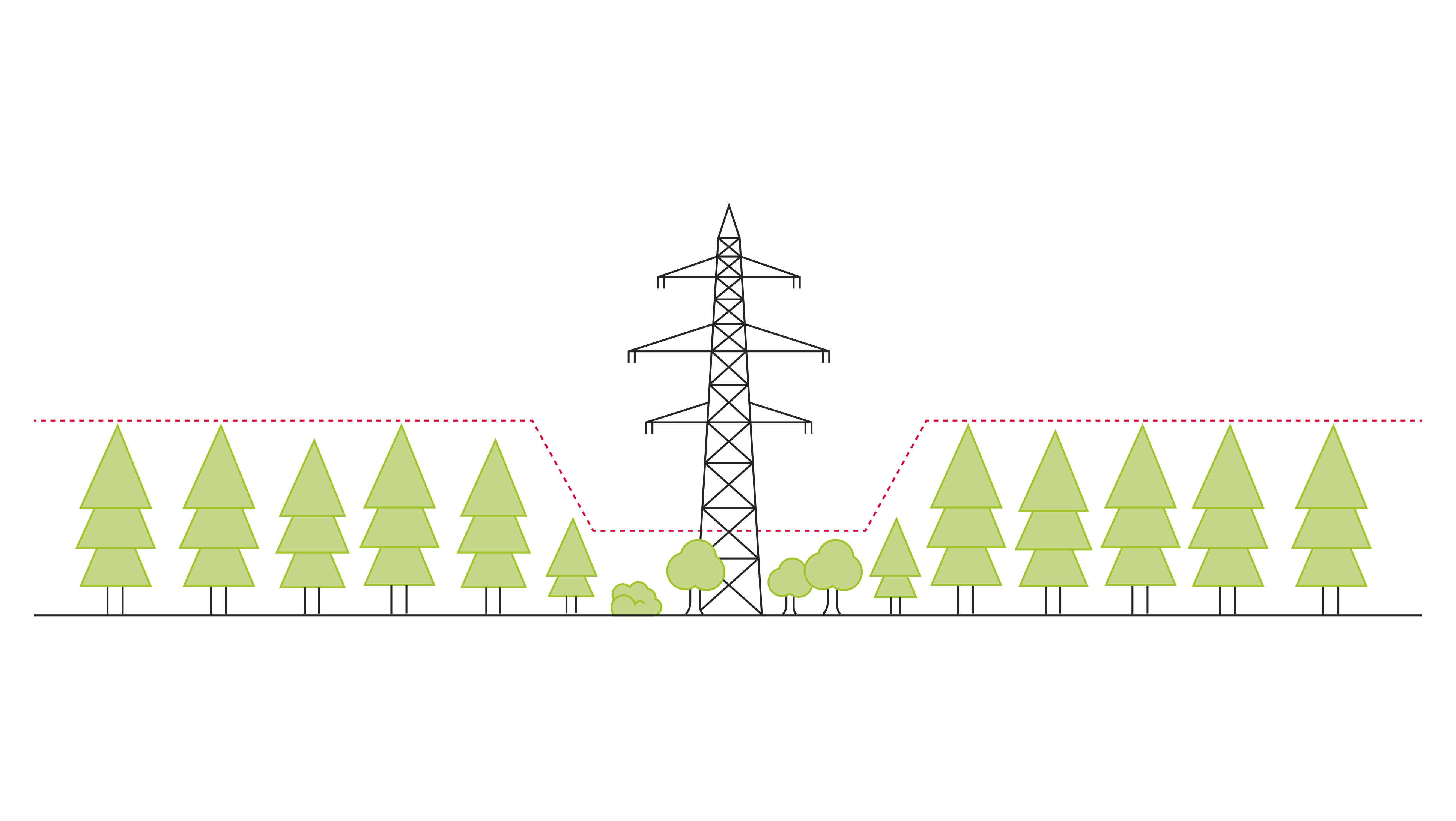
The construction of overhead lines in forest areas requires deforestation, for example for access routes, depots or the construction of pylon foundations. Some of these areas can be reforested once the construction work has been completed. Only low-stemmed trees may be planted directly under overhead lines.
Overhead lines and underground cables have advantages and disadvantages when it comes to operating and maintaining the grid. Technical challenges such as ensuring voltage stability increase as the number of underground cable sections of the transmission grid rises. This is because the two technologies have different electrical properties, which have an impact on the stability and availability of the transmission grid.
Overhead lines
Overhead lines and pylons are regularly inspected and maintained to ensure that the transmission system remains available at all times. The service life of an overhead line is around 80 years.
The land under an overhead line can be farmed without any major restrictions – subject to safety rules.
An underground cable route includes transitional structures, the cables themselves and sleeve shafts. According to current estimates, the service life of an underground cable is around 40 years.
The ground above the cable conduit block can be used again for agriculture and vegetation. As roots could damage the underground cable, however, the route must be kept clear of tall or deep-rooted trees.
Overhead lines are more exposed to natural influences such as lightning, ice or falling trees than underground cables. They are therefore more frequently affected by disturbances and interruptions than underground cables, which are well protected in the soil. However, problems affecting overhead lines can usually be rectified within a few minutes or hours.
Underground cables
Disturbances rarely occur on underground cables, although they take much longer to resolve than on overhead lines, because if a fault does occur, it will generally result in damage to the underground cable, which will then need to be replaced. This can take several weeks to months, as cables are made to measure and produced especially for each individual project. Removing damaged cable and laying new cable can also take a long time due to the high weight of underground cables.
Swissgrid is open to the use of all technologies, and examines the overhead line and cabling options for every project. When assessing their advantages and disadvantages, it is important to consider not only the individual line section, but also the grid as a whole. Physical phenomena and operational challenges limit the use of underground cables in the transmission system. Swissgrid supports technological innovations and pilot projects for the grid of the future.
Voltage maintenance
Swissgrid’s grid control room monitors the voltage in the transmission system around the clock to ensure that it remains within a certain band. Otherwise, there is a risk of damage to electrical systems. Due to their physical properties, underground cables increase the voltage much more than overhead lines. If the number of kilometres of underground cable in the transmission system increases, the usual measures taken to maintain voltage – i.e. instructing power plants to increase or reduce their production – are no longer sufficient. Compensation systems may be needed, for instance. However, these systems require a lot of space, are expensive and cause noise. Furthermore, additional technical components increase the degree of complexity and hence susceptibility to faults in the transmission system.
Reactive power
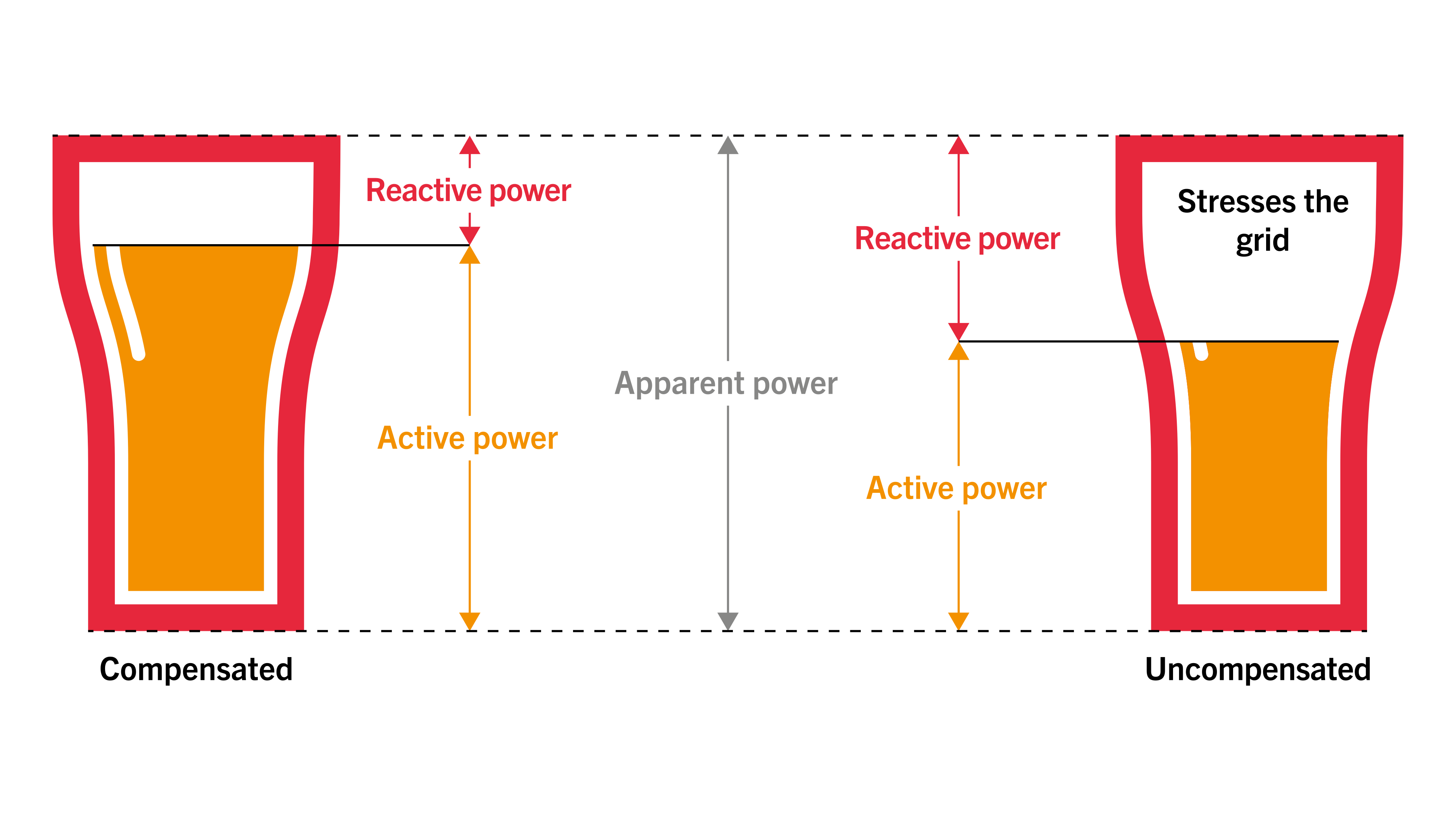
Reactive power is like the foam that fills the top of the glass and leaves less room for the beer. Physically, a distinction is made between capacitive and inductive reactive power, which compensate for each other and ideally cancel each other out completely. Swissgrid tries to operate its lines as closely as possible to this point, which is referred to as «natural power». This is not possible with underground cables as they would heat up too much. Long underground cables therefore either reduce the effective power of a line (active power) or require systems to compensate for the reactive power. This difficulty increases in proportion to the length of the underground cable.
Electrical energy is always lost when electricity is transported. The active power losses depend on the transmission power. They are higher for overhead lines than for underground cables. If the losses due to the compensation of reactive power are added to the figures for underground cable lines, the total losses are approximately the same for both transmission technologies.
Costs
The construction costs of an extra-high-voltage line can vary a great deal from case to case – depending on the topography, subsoil, potential natural hazards and technology. As a general rule, a kilometre of underground cable in the transmission system is around two to ten times more expensive than a kilometre of overhead line. When assessing economic efficiency, Swissgrid takes into account not only the construction costs, but also the life cycle costs of the various line variants.
Swissgrid’s calculation is based on a line service life of 80 years. However, various components must be replaced sooner. In the case of underground cables, the underground cables themselves are a particularly important cost factor. Due to their technical life expectancy, underground cables can only be operated for half as long as overhead lines and have to be replaced completely after around 40 years.
Cost of overhead lines
1/3: Chamoson – Chippis 4.7 CHF million per km – The extra-high-voltage line between Chamoson and Chippis carries four voltage levels on the same pylon: 380 kV, 220 kV and 65 kV between Chamoson and Aproz, and 132 kV SBB between Chamoson and St-Léonard, allowing almost 89 kilometres of lines to be dismantled on the Rhône plain.
2/3: Airolo – Lavorgo CHF 3.6 million per km – The new 380-kV extra-high-voltage line between Airolo and Lavorgo runs along the right-hand side of the valley and replaces the existing 220-kV line. A 132-kV SBB line is bundled on the same pylons to supply the AlpTransit Gotthard railway line.
3/3: Pradella – La Punt: CHF 1.5 million per km – Swissgrid has added a second 380-kV line to the entire 50 km route between Pradella and La Punt. Today, the pylons therefore carry one line on each side. This has a positive impact on emissions, which are lower overall than before.
Cost of underground cabling
1/3: La Bâtiaz – Le Verney CHF 29.1 million per km – The project involves drilling a tunnel with a diameter of around 2.5 metres and a depth of 12 to 20 metres between different groundwater layers over a length of 1.2 kilometres. The special geological conditions at precisely this point on the Rhône plain make this technological masterpiece possible.
2/3: The cost of the construction of partial cabling over a length of 1.3 kilometres with two transitional structures is around CHF 20.4 million. The Beznau – Birr project shows that costs of around 10 to 15 million francs per kilometre are to be expected for partial underground cabling on the Swiss Central Plateau (transitional structures, normal subsoil, crossing under existing infrastructure). This makes the costs for the underground section of the Beznau – Birr extra-high-voltage line about six times higher than for an overhead line over its entire service life.
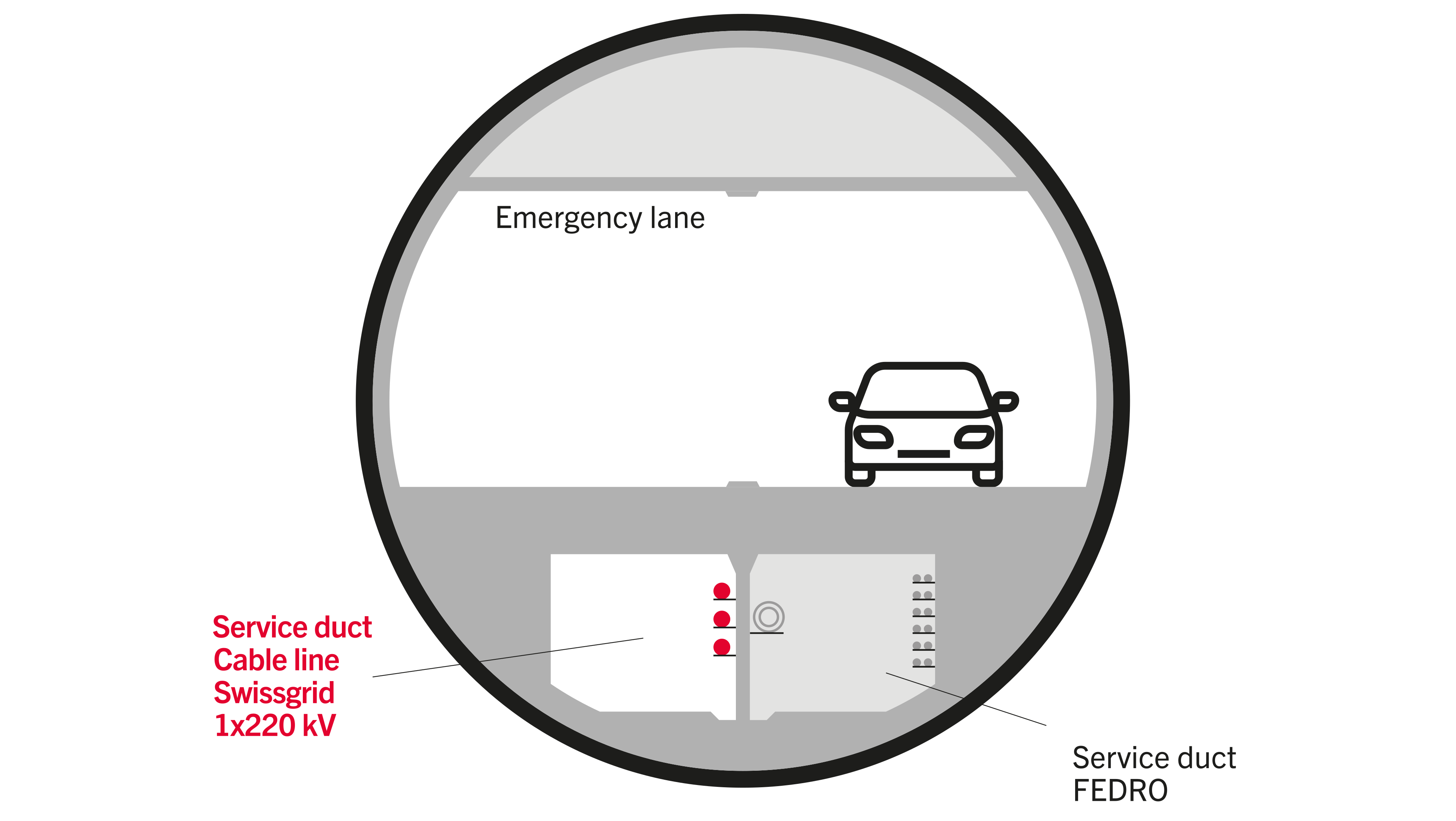
3/3: Airolo – Mettlen (Gotthard line): CHF 6.0 million per km – Bundled through the mountain: the construction of the second Gotthard Road Tunnel tube offers the opportunity to bundle infrastructure and to lay new extra-high-voltage lines in the service duct which will run under the carriageway.
Basis for decision-making
Large infrastructure takes a long time to build. On average, it can take over 15 years from the start of a project to commissioning – due to lengthy authorisation procedures, frequent objections and court rulings.
The Federal Council reaches a decision for an underground cable or an overhead line during the sectoral plan procedure. An important role is played by a support group set up by the Swiss Federal Office of Energy for each project. It works as follows:
The support group is made up of representatives of several federal offices (e.g. spatial development, environment, transport), the Federal Inspectorate for Heavy Current Installations (ESTI), the Federal Electricity Commission (ElCom), representatives of the affected cantons, an environmental protection organisation and Swissgrid. Each party has one vote. The group makes recommendations to the Federal Council for defining the planning area and planning corridor and deciding on the technology (overhead line or underground cable). Various federal offices introduced a special methodology a few years ago, the «Transmission lines evaluation scheme», to make sure that the best possible solution can be found. It allows the strengths and weaknesses of the variants to be weighed up objectively, comprehensively and systematically. The scheme is based on the four areas of spatial development, technical aspects, environmental protection and cost-effectiveness.
The chosen option should utilise space as economically as possible and, where possible, always be bundled with other infrastructure. Residential areas and local recreation areas should be protected, and overarching plans, projects and concepts must be taken into consideration.
The variants must satisfy technical minimum requirements – e.g. in relation to their permissible load, susceptibility to faults or duration of repair. The risk from natural hazards or weather influences must also be assessed. This enables the energy losses to be calculated and a life cycle assessment to be drawn up over the entire life cycle of the variants.
There are limits that must be adhered to for protection against exposure to electromagnetic radiation and noise. When it comes to the landscape, the guiding principle is «maximum protection». Conservation areas of national importance may only be affected if there are no alternatives. Biotopes, migratory bird reserves and water areas must also be taken into account.
This involves estimating the costs, including the investments and replacement investments over the entire service life, as well as investments for support measures. Every grid project must be assessed by the regulator from an economic perspective, as the costs are passed on to consumers in their electricity bills.
Bundling of infrastructure: Airolo – Mettlen (Gotthard line)
In recent years, Swissgrid has installed underground cable lines with a total length of over 40 kilometres in the transmission system. Swissgrid bundles underground cables with other infrastructure projects wherever possible and whenever it makes sense to do so.
The construction of the second tube of the Gotthard Road Tunnel by 2029 offers Swissgrid a wide range of opportunities. The combination of an extra-high-voltage line with a motorway tunnel is a pioneering project that is the first of its kind in Europe. Swissgrid can gain valuable experience from this technically demanding project. Another plus is that the burden on the Gotthard landscape will be relieved by dismantling 23 kilometres of overhead lines and 70 pylons.
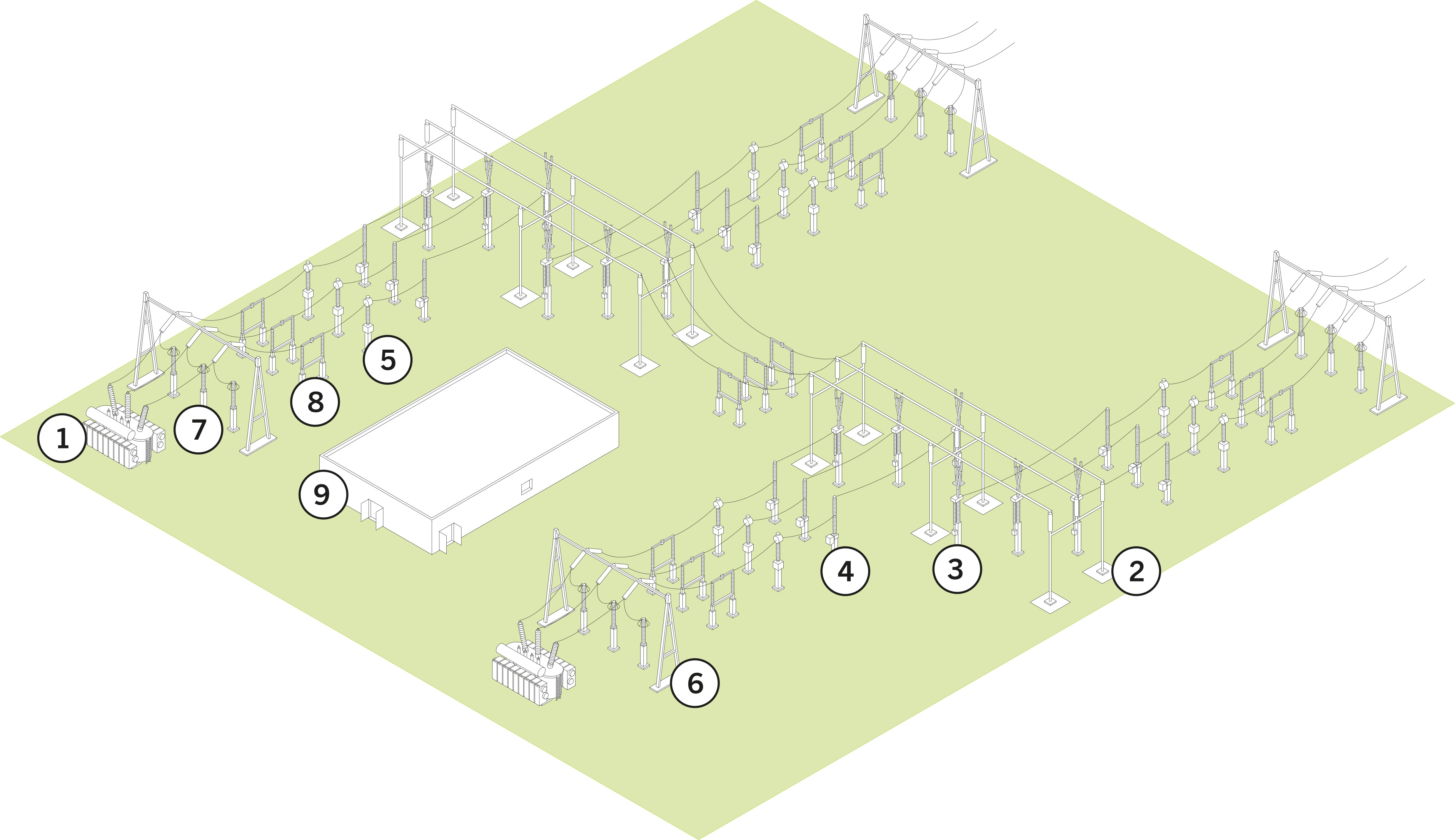
Substations are among the most important elements in the extra-high-voltage grid because they represent the nodes of the grid. Substations consist of transformers and switchgears. Swissgrid’s extra-high-voltage grid comprises 126 substations housing 148 switchgears and 32 transformers. This means that every substation has a switchgear, but not all substations have a transformer.
Important elements in the transmission grid
The switchgears in the substations connect the extra-high-voltage lines with each other. The operators in the Swissgrid control centres in Aarau and Prilly can disconnect or connect the lines by means of switching operations. By doing so, they can control energy flows, prevent overloads and switch off lines for maintenance work. The substations also have protective systems installed in them. In the event of a fault (e.g. lightning striking a line), they switch off the affected grid sections in a targeted manner.
Illustration of a substation with transformers: the substations are controlled from the control centres in Aarau and Prilly. However, if required, the plant managers can take control of the substations and disconnect elements on site.
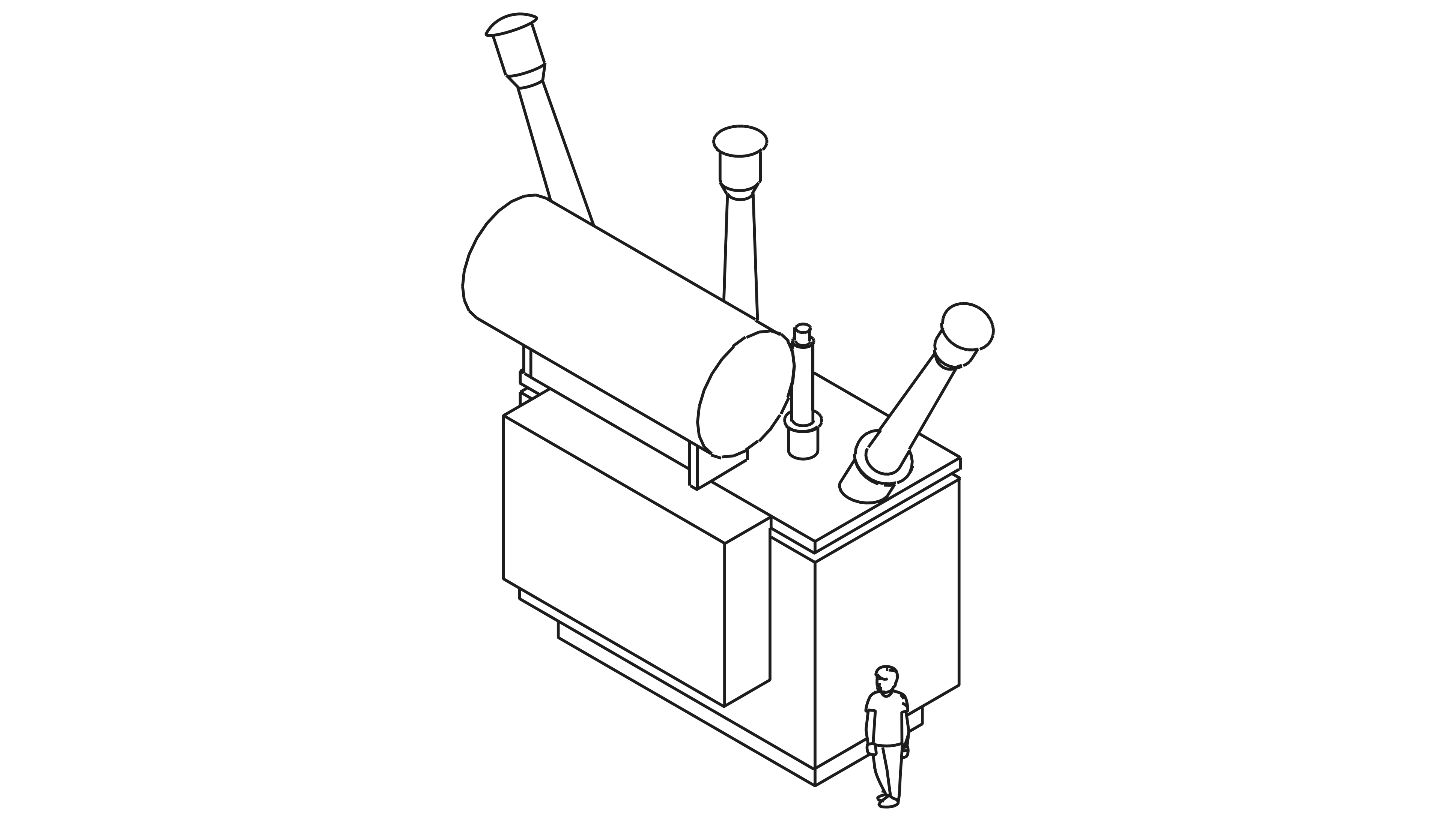
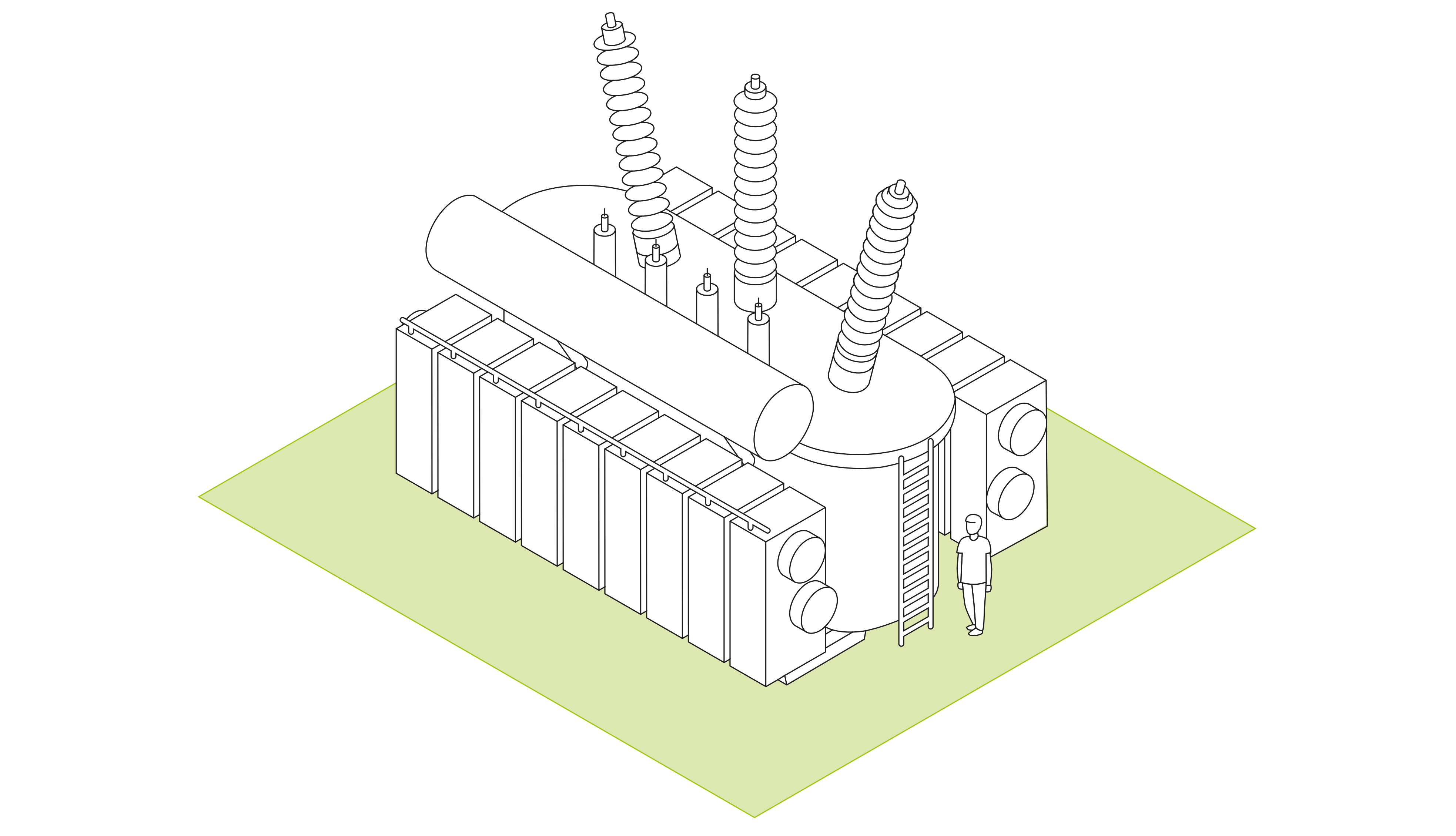
The transformer is the heart of the grid. Transformers increase or reduce the voltage of the electrical energy or current. The higher the voltage, the lower the losses along the power lines. The extra-high-voltage grid has a high voltage in order to transport energy over long distances whilst minimising losses as much as possible.
A busbar is used to connect the extra-high-voltage lines that arrive in the substation. The energy from the various extra-high-voltage lines can be distributed over the busbars via substation feeders to control the power flow in the grid.
The disconnecting switch visibly separates the open wire circuit and the switchgear. Following disconnection, the grid element has no voltage, but is actually switched off by the circuit breaker.
Circuit breakers are used to connect or disconnect elements in the electrical grid. In other words, they can disconnect lines or power plants from the grid, cutting off their voltage, or alternatively connect them to the grid. Circuit breakers and disconnecting switches are controlled from the grid control rooms.
Instrument transformers are among the control instruments of the switchgear. They measure the voltage as well as the intensity of current. The measured values are transmitted to the protection and control technology equipment installed locally as well as to Swissgrid’s grid control rooms in Aarau and Prilly. These values help the Swissgrid experts there to determine the current grid situation. The necessary measures can be taken as appropriate.
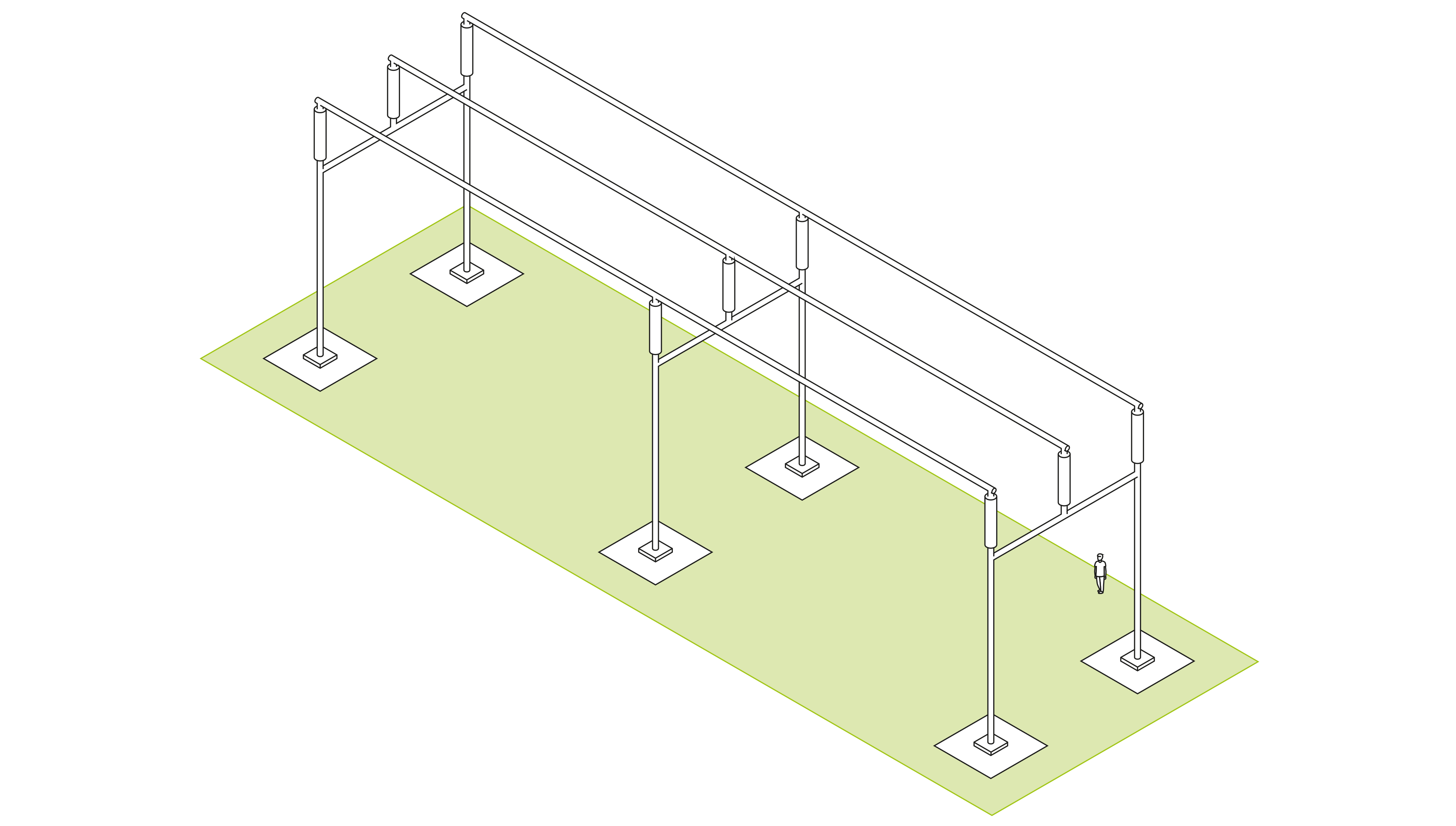
A gantry is a portal with a lattice design that the ropes of the overhead lines are attached and anchored to in order to stabilise them. The lattice structure carries the weight of the ropes and absorbs the forces exerted on the ropes by wind and ice.
A lightning arrester protects the essential components of the switchgear from excessive electrical voltages that can occur, for example, if lightning strikes. In this way, it protects system components such as transformers from damage without interrupting the power supply.
An earthing switch grounds part of the system that has been switched off and therefore has no voltage. It prevents hazards from occurring due to charging of any parts that have been switched off. In combination with the line isolating switches, this allows a safe working environment to be created in the switchgear.
The protection, control and communication technology is located in the service building. The measured values from the entire switchgear are collected here, so that all elements can be managed and checked very quickly. In addition, the service building has its own power supply, including battery systems. These help to ensure the uninterrupted operation of the switchgear at all times.
This website uses cookies. By continuing to use this website you agree to the use of cookies. More information can be found in the privacy policy or the legal information.