Why the project is important
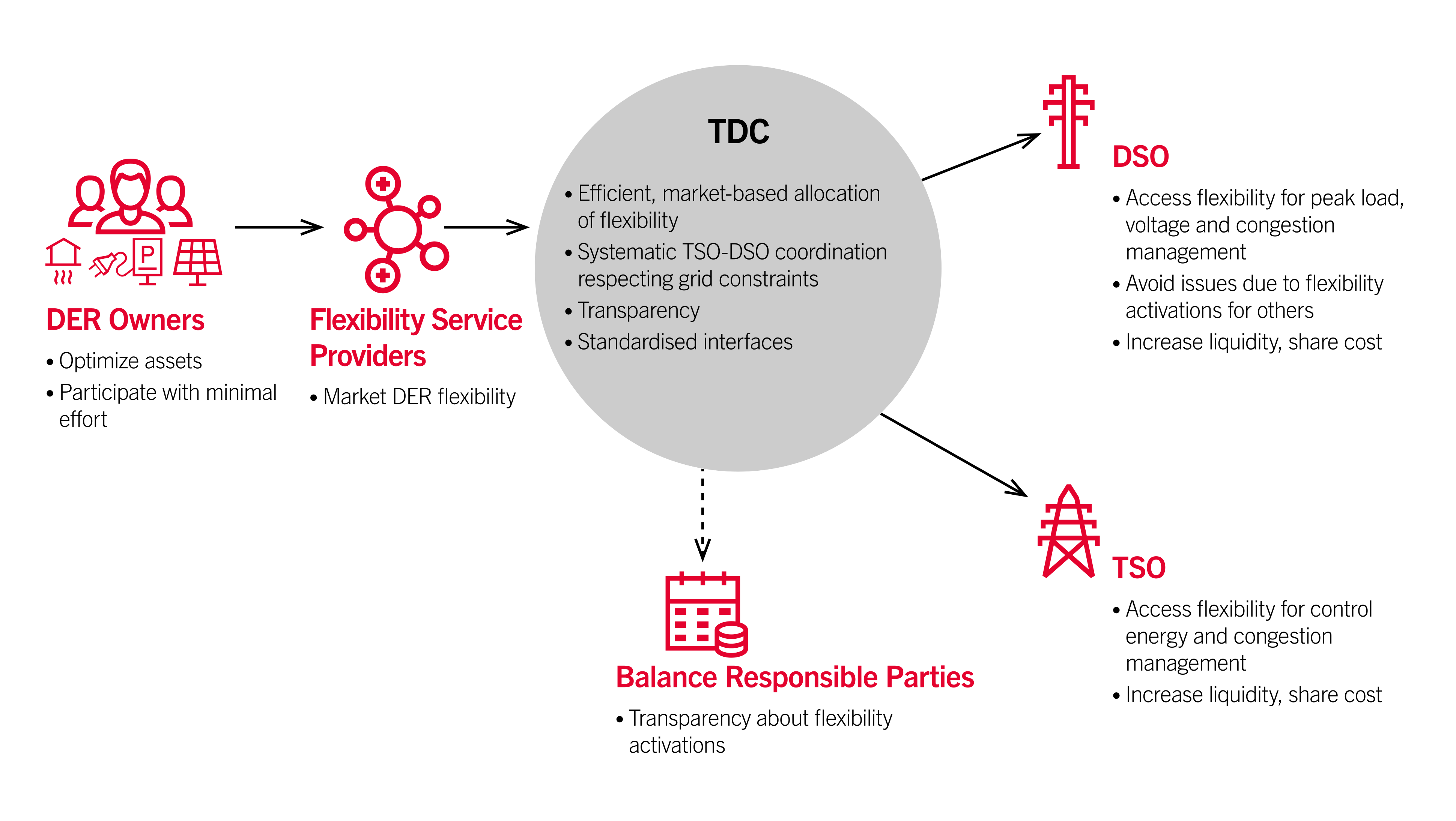
TSO-DSO Coordination enables transmission and distribution system operators to procure grid and ancillary services efficiently, securely and in a scalable manner. The integration of photovoltaics, electromobility and heat pumping technology becomes possible thanks to:
- Stability and efficiency: flexibility is used where it benefits the grid most – for grid security and cost optimisation.
- Market focus: a new business model for flexibility providers creates competition and innovation.
- Sustainability: the energy transition is accelerated without jeopardising grid stability.
Project
Challenge
Decentralised energy resources such as photovoltaics, heat pumping technology or charging stations for electric vehicles are spreading rapidly. While they support the energy transition, they create challenges at all levels of the transmission and distribution grid. For example, they can lead to localised congestion, voltage violations or imbalances between electricity generation and consumption throughout the entire system.
Solution
The «TSO-DSO Coordination (TDC)» project demonstrates how decentralised flexibility can be used to benefit the grid. Resources such as batteries, heat pumping technology and charging stations are controlled so that they can respond to the changing demands of the grid. Flexibility service providers offer this flexibility by storing, consuming or feeding energy into the grid – depending on what is best for grid stability and efficiency.
Distribution system operators and Swissgrid can divide their grid into different local market areas where flexibility can be made use of or limited if necessary. Market optimisation takes account of supply and demand within the limits of the grid. Central optimisation considers the impact of flexibility activation on different grid levels, allows aggregation across different market areas and ensures that activating flexibility does not cause imbalances.
Swissgrid is working with industry partners to drive forward this innovation project, which is now entering the test phase.
What was developed most recently in phase B?
Axpo, Azienda Elettrica di Massagno (AEM), CKW, ewz, Groupe E, Primeo Energie, Romande Energie, St.Galler Stadtwerke (sgsw) and Swissgrid worked on TSO-DSO Coordination phase B together from 2023 to December 2024 and enhanced the initial coordination concept from phase A.
Benefits
- Contribution to grid stability and security of supply: the project allows flexible resources (batteries, heat pumping technology, charging infrastructure) to be used in a coordinated manner to avoid congestion and ensure voltage maintenance. This will guarantee grid stability even with huge increases in feed-in from photovoltaics and electromobility.
- Guaranteed, contractual utilisation as a supplement to dynamic tariffs: the Electricity Supply Act and the Electricity Supply Ordinance, which came into force on 1 January 2026, introduced new instruments for the grid-friendly use of flexibility. TSO-DSO Coordination complements these instruments with a way to utilise flexibility with short lead times, minimal administrative effort and no imbalances.
- Efficiency and cost optimisation: by adopting a market-based approach, flexibility is used where it benefits the grid most. This reduces the need for expensive grid expansions and lowers system costs.
- Promoting innovation and competition: the project creates a new business model for flexibility providers. Aggregators can offer their services on a coordinated market, which promotes competition and innovation. Sustainability: TSO-DSO Coordination accelerates the integration of renewable energies without jeopardising grid stability. This will support the decarbonisation of the energy system.
Current project status/outlook
The current phase, phase C, is divided into two parts. Firstly, from March 2025 to spring 2026, the coordination concept will be tested using simulations and a pilot project focussing on the processes of distribution system operators. A study will also be carried out on the market potential in Switzerland. This will be followed by preparations for implementation by the spring of 2027.
Other interested aggregators or distribution system operators can get in touch with the contact person and ask to be included in the TDC Consultative Group, which receives updates on the project approximately every 3–4 months.