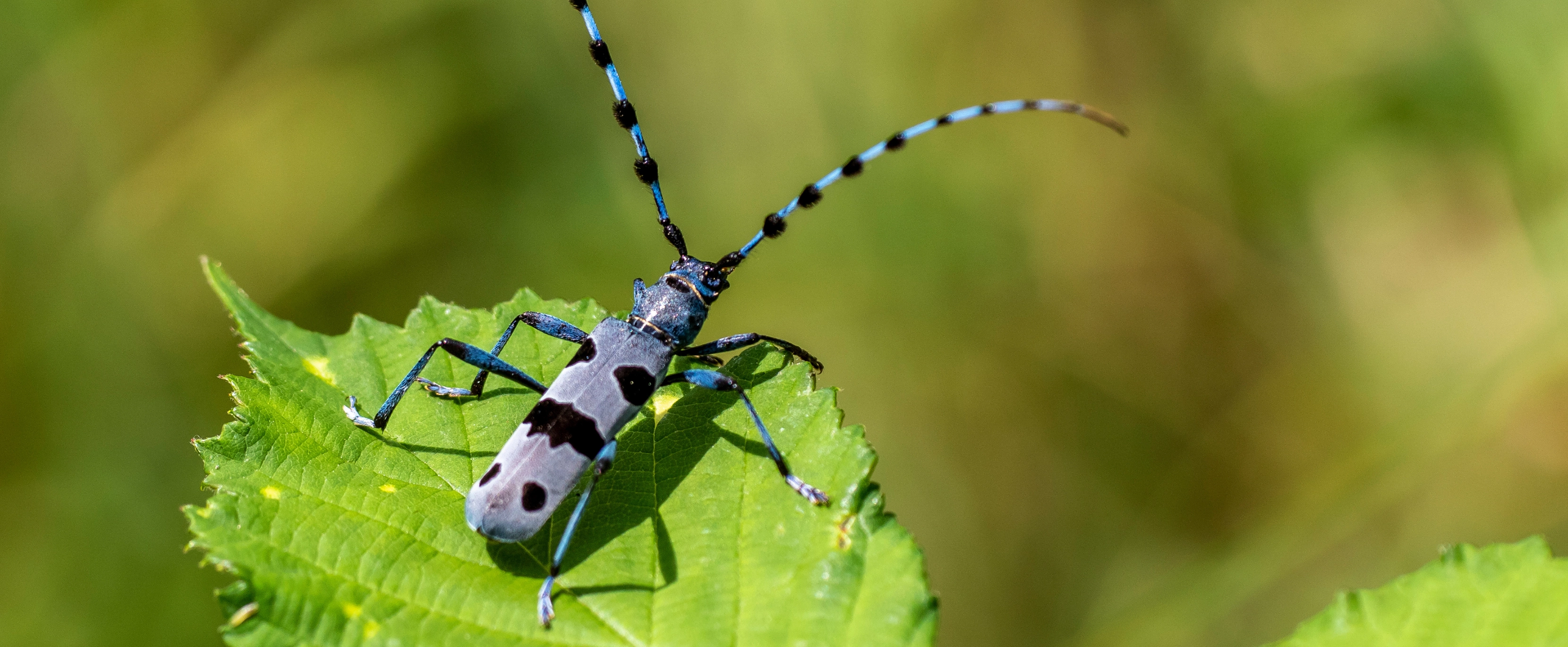
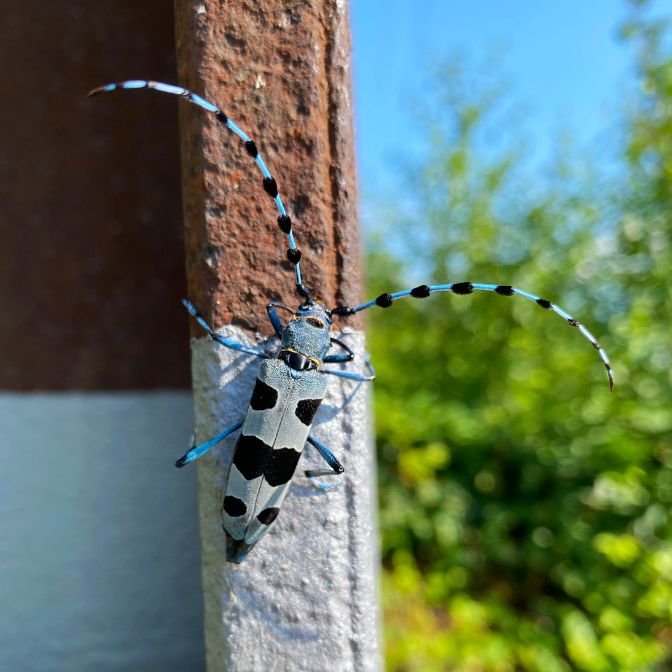
You have to look carefully to spot the Alpine longhorn beetle. Seen up close, this light blue and black beetle is a beautiful specimen that is also very rare. It spends most of its life as a larva in dead beech wood, where it lives for up to five years before it emerges from its pupa and gnaws its way out through the wood. Once outside, its life as a beetle is relatively short, as it only survives for three to four weeks. The Alpine longhorn beetle dedicates most of this time to reproduction.
Dead beech wood is in short supply
The Alpine longhorn beetle has been in a difficult situation for a long time due to the lack of dead beech wood in sunny locations where its larvae can develop. In Swiss forests, which are intensively managed and cleared in many places, this type of wood is in short supply. Dead trunks and broken branches are usually moved aside much too thoroughly. All too often, the beetles can then only find the habitat they need for their larvae on the edges of forests in piles of firewood. This has fatal consequences, as the wood is generally removed and burnt before the beetles hatch, which means that the larvae of the Alpine longhorn beetle die in the flames.
Patience encourages biodiversity
As it takes several years for the beautiful beetles to hatch after the eggs have been laid, patience is required when managing deadwood. In the medium to long term, this not only has a positive impact on the Alpine longhorn beetle, but also on a whole host of different insects and fungi that are able to find a suitable habitat in deadwood.
It all depends on the right upkeep
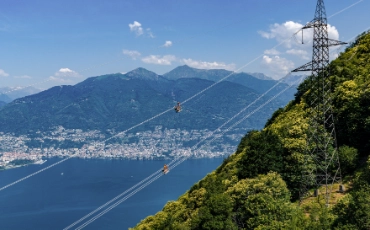
The routes of overhead lines could prove to be an ideal breeding ground for the Alpine longhorn beetle. In a Swissgrid pilot project, the forester responsible for a certain area where the Alpine longhorn beetle had been observed decided to keep the management of the land under the extra-high-voltage line to a minimum. He now leaves beech tree stumps about two metres high and preserves them to make sure they are not damaged by falling trees in the surrounding area. Provided there is no safety risk, he pays attention to maintaining and facilitating the presence of standing and lying deadwood.
Swissgrid now aims to integrate the nationwide data on the occurrence of the Alpine longhorn beetle into its internal geoinformation system. In this way, care can also be taken in other sectors. The project is currently still in preparation and requires further clarification.