

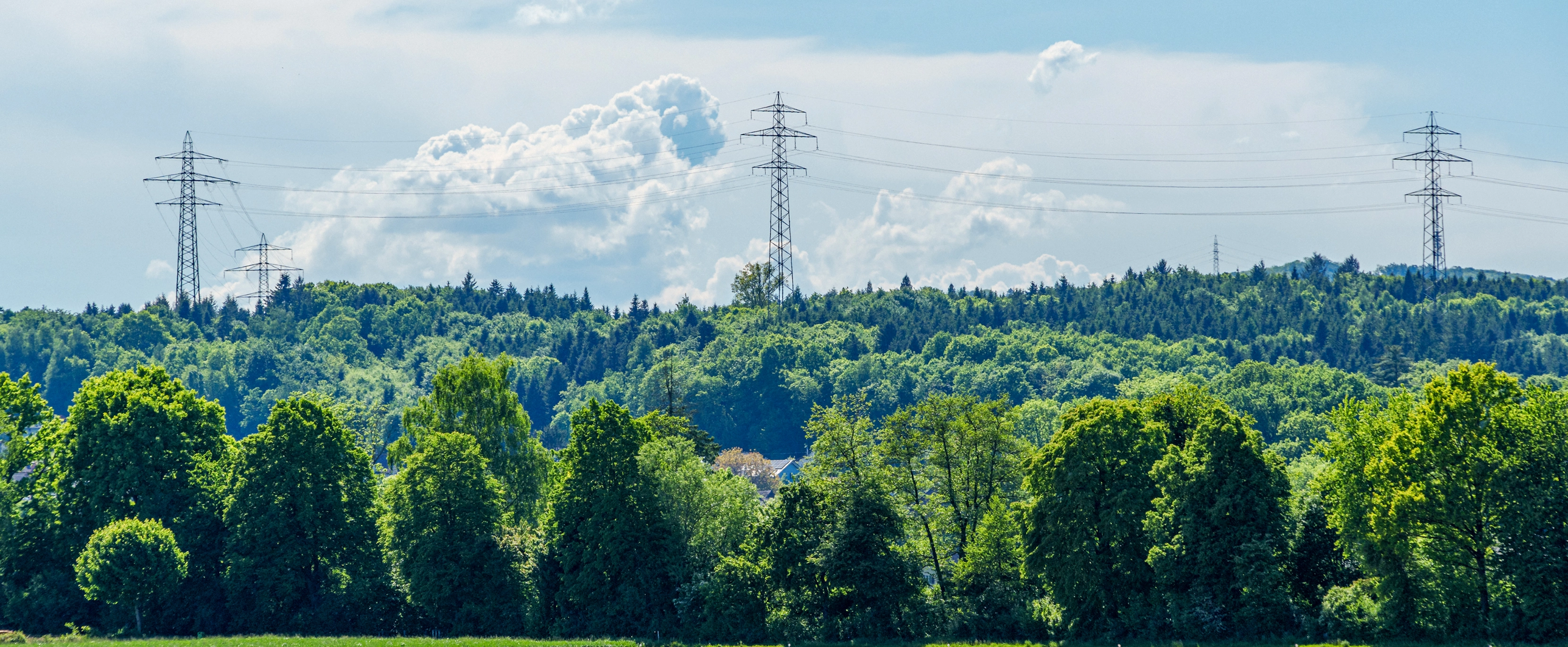
Some people don’t notice them at all, others find them annoying and others admire them as a feat of engineering: the steel pylons along power lines. But have you ever wondered why some are higher than others? This is no coincidence. A lot of planning goes into every pylon.
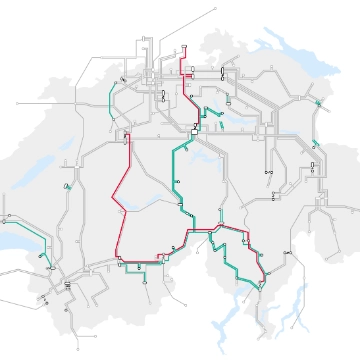
Swissgrid maintains more than 6,700 kilometres of extra-high-voltage lines and 12,000 pylons throughout Switzerland. Many of them are located in challenging terrain: in mountainous, steep locations that are often difficult to access, on rocky, sometimes unstable ground. Building new lines on this type of terrain poses technical difficulties.
The location of the line is determined during the sectoral plan procedure. The decision is also made whether to plan underground cabling or an overhead line above the ground. Assuming that an overhead line is chosen, we answer some frequently asked questions: why are the pylons so high?
The height of an individual pylon depends on a range of factors:
1. Safety first
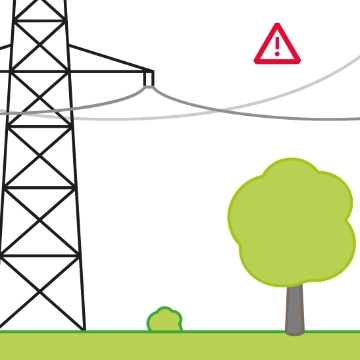
The Lines Ordinance (LineO) stipulates the minimum ground clearance to be observed. The higher the voltage, the greater the distance to the ground, and the higher the pylons. At 380 kilovolts – the highest voltage level in the Swiss electricity grid – a certain distance must be respected between the conductors and the roads, fields and houses below. This is to protect humans, for example from electromagnetic fields. Swissgrid complies with strict regulations – there is hardly any other country where the limits for protection against non-ionising radiation are as strict as in Switzerland. Find out more
Lightning protection requirements and even coordination with the aviation industry must also be taken into account, for example if a line runs close to an airport or coincides with helicopter flight paths when crossing valleys. You have probably already seen these orange balls on conductors. They are warning spheres that make the line more visible to pilots.

2. The terrain makes all the difference
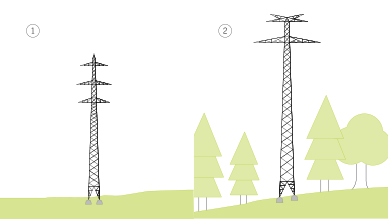
If the ground below a line remains flat, comparatively low pylons are sufficient. But what happens if the line has to cross a valley, a body of water, another line or a cable car? Then extra height is needed to maintain the safety distance. A pylon on a 380-kilovolt line suddenly becomes 90 metres high instead of 60.
3. Pylons in forests
The situation becomes more complicated in forests. There are various options. The forest in the area of the line may be cleared completely, creating an aisle. This has the greatest impact on the forest. However, it also allows the lowest pylons to be constructed. Instead of this, the trees in the area of the line can simply be topped to keep them lower than the rest of the trees in the forest. This option represents a compromise between protecting the forest and ensuring the visibility of the pylons. The third option is to span the forest. In this case, the trees can continue to grow to a specific height, even underneath the line. However, this option, which is the kindest to the forest, also requires higher pylons than the other options.
In most cases, the relevant cantonal authority decides which option Swissgrid must use to plan a line. It may be specified in the cantonal forest law. And these requirements vary from canton to canton. If, for example, the trees in a forest are to be allowed to reach a height of 45 metres, Swissgrid must plan to construct pylons of a height of up to 89 metres in order to observe the necessary minimum distances between the conductors and the treetops.
The alternative to erecting high pylons in a forest is to plan the line away from the trees – i.e. closer to residential areas. And if you’re wondering why Swissgrid doesn’t simply opt for underground cabling: in a forest, this would mean permanently clearing a wide aisle without any trees at all. What is more, there are many other factors that fundamentally argue against the use of underground cabling in the transmission grid. Of course, underground cabling could also be planned away from the forest. But even then, it would still have a major impact on the environment. Find out more in the Blog post «Overhead lines – an underestimated contribution to sustainability»
4. Wind and weather
In the winter, ice can weigh down the conductors, while in the summer, the conductors sag as they expand in the heat. Our engineers calculate these effects precisely. Based on these calculations, they dimension the pylons so that the conductors will hang securely, even in extreme conditions, and can transport the electricity reliably to wherever we need it.
5. Technical details
Some routes carry several systems, for instance lines operated by Swissgrid and by partners such as distribution system operators or SBB. Bundling lines is an advantage for the landscape. However, the more conductors there are on a pylon, the higher and often more massive the structure has to be in order to withstand the tensile and compressive forces. The insulators that hold the conductors also play a role.
Conclusion: precision, not coincidence
Planning begins long before the first pylon is built. Swissgrid starts the construction project once the planning corridor has been defined by the Federal Council. The project phase lasts around two years. During this time, Swissgrid looks for the best possible route for the line. Swissgrid holds discussions with all the players involved, such as landowners, to negotiate easements and determine the dimensions of the pylons. For this purpose, it liaises with the authorities and a project advisory council consisting of representatives of the cantons, municipalities and interest groups. After all, a line must not only be safe, but also remain compatible with the landscape. In addition, a project is subject to many other concerns, some of which can be strongly divergent.
The height of an electricity pylon is therefore no coincidence. It is always determined by weighing up different aspects: safety, technology, the environment and cost-effectiveness. Swissgrid cannot simply place pylons wherever it likes or build them to any height. Each pylon is carefully planned – to ensure a reliable and secure power supply in Switzerland.
Curious? Next time you see an electricity pylon, scan the pylon sign. This will tell you the height of the pylon and other important information. Find out more: Pylon 1710x003
Links
Blog: «When physics sets limits for technology»
Blog: «Overhead lines – an underestimated contribution to sustainability»
Author