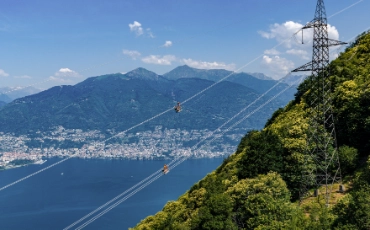
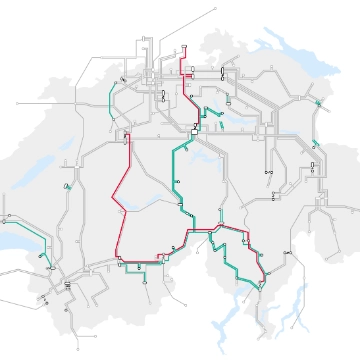
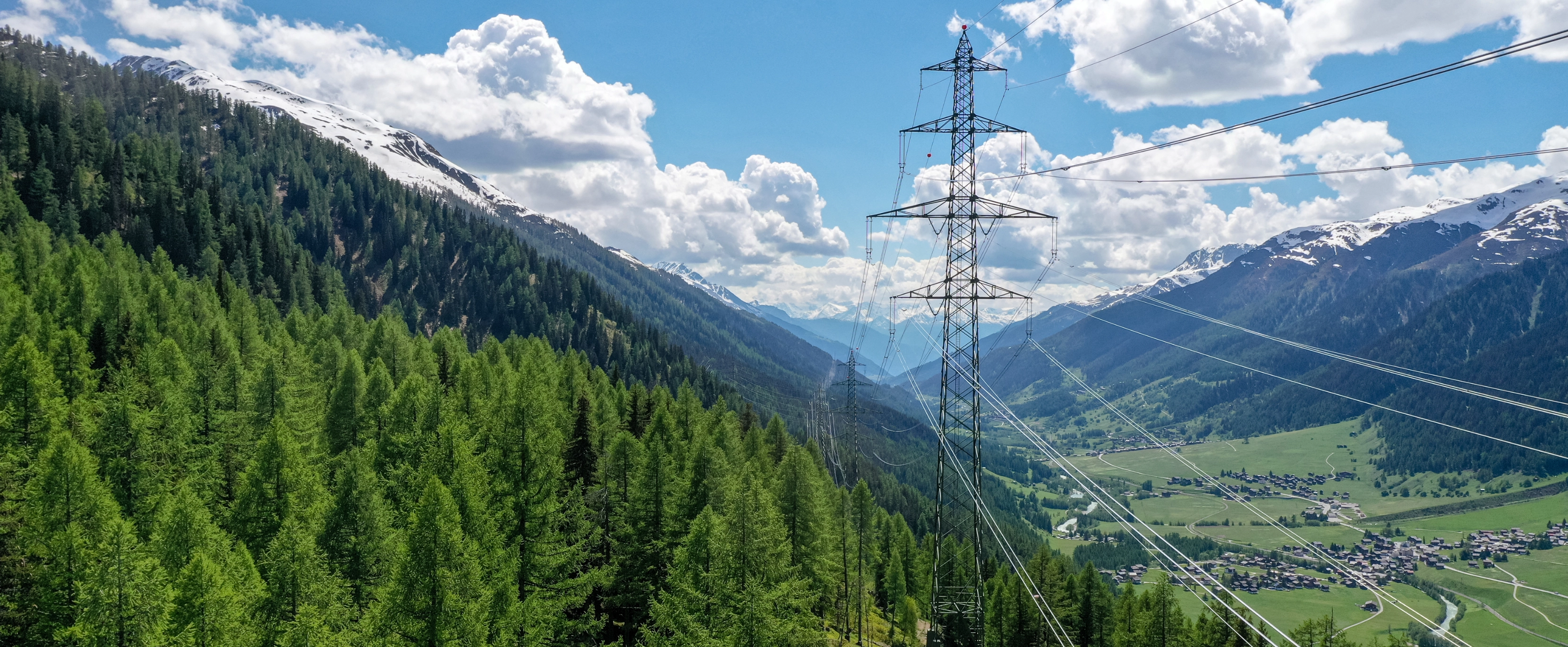
In view of the federal government’s energy strategy, the capacity increase is necessary to transport the growing electricity production from hydropower in the canton of Valais to Central Switzerland and thus strengthen security of supply in Valais and the whole of Switzerland in the long term.
Expansion of important energy axes
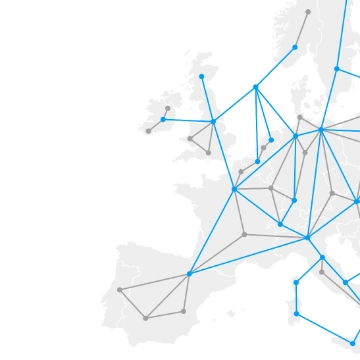
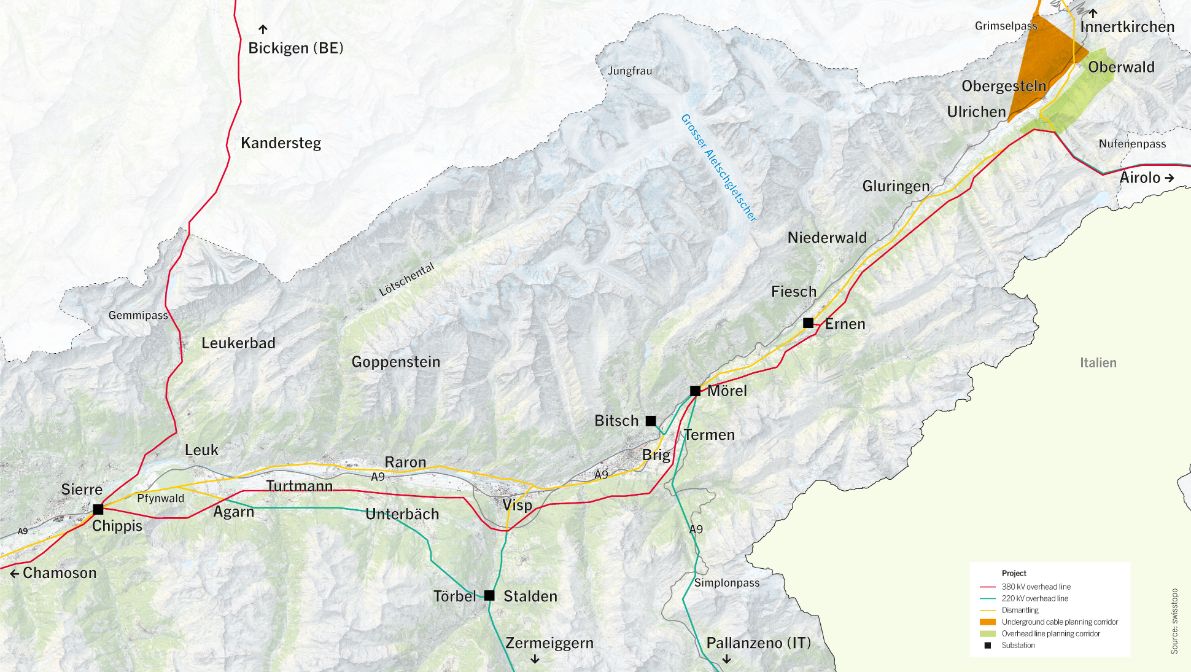
To ensure Switzerland’s long-term security of supply, it is vital to implement the necessary increase to 380 kilovolts (kV) as quickly as possible. Expanding the grid in line with demand is a key aspect: distributing the energy flows over several north-south axes – e.g. via Grimsel or Gemmi – increases the transport capacity. The lines also play a role in the transfer of electricity on the north-south axis. Switzerland is not an island, but is integrated into the European transmission grid. This is important and, not least, also serves Switzerland itself, e.g. in the event of a shortage. Switzerland’s grid is only stable if the European grid is stable.
Energy production and the transmission grid in transition
The Mühleberg nuclear power plant was shut down in December 2019. As a result, there is a deficit in electricity generation in Central Switzerland amounting to almost 3,000 gigawatt hours per year. This corresponds to five percent of Switzerland’s energy production or the annual consumption of 700,000 households. In order to compensate for the electricity which is now no longer fed into the Swiss electricity grid, more electricity has to be produced in the medium term in other Swiss power plants, such as the 900 MW Nant de Drance pumped storage power plant, which is one of the most powerful in Europe, and transported to Central Switzerland.
Averting structural congestion
The Swiss transmission grid is already showing signs of structural congestion. The grid infrastructure in the canton of Valais is particularly affected. It is crucial to ensure the secure connection of the hydropower plants in the Alps with the consumer centres in Central Switzerland. Swissgrid already has to regularly instruct power plant operators to limit their production. That is why voltage increases to 380 kV are essential. This is the only way to transport the energy produced to other parts of the country, thereby ensuring security of supply throughout Switzerland.
Information on individual grid projects
Author