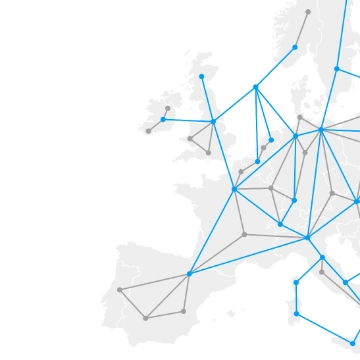

At first glance, the situation seems clear: electricity is flowing, the lights are on, and Switzerland is closely interconnected with the European electricity grid. So why does Switzerland need an Electricity Agreement with the EU at all?
The answer is simple: while the current arrangements are working, they are based on transitional and special solutions. At the same time, the EU is continuing to integrate its electricity market and strengthen cooperation between transmission system operators. Without an Electricity Agreement, Switzerland risks gradually losing its connection to these developments.
Whether the Electricity Agreement is accepted or rejected, one thing is certain: the status quo will not remain in place. Switzerland’s current position is changing, and without an agreement, its role within the European electricity system is likely to weaken over time.
Why does it work today?
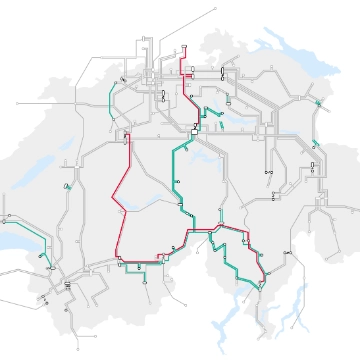
Switzerland is closely interconnected with the European electricity grid through 41 cross-border transmission lines. Although Switzerland is not part of the EU internal electricity market, Swissgrid is currently able to ensure many operational processes through technical agreements with its European partners.
At present, this cooperation works because European transmission system operators and authorities are often willing to find pragmatic solutions. However, many of these arrangements are based on private-law agreements that need to be renewed regularly and do not provide long-term legal certainty.
As a result, the current situation is less stable than it may appear at first glance. While the system is functioning today, it relies heavily on temporary arrangements rather than a permanent and legally secured framework for cooperation.
Why will the status quo no longer exist?
The EU is continuously developing its electricity market and is increasingly integrating grid planning, electricity trading and system operation at the European level. Switzerland does not participate in these processes on an equal footing and, without an Electricity Agreement, will increasingly be treated as a third country.
The consequences are already becoming visible: European grid development projects are increasingly being planned without Switzerland, and important rules governing grid operation, cross-border capacities and electricity markets are being developed without Swiss involvement. While Switzerland remains physically at the heart of the European electricity system, its institutional and regulatory influence is gradually diminishing.
As European integration continues to advance, it will become increasingly difficult for Switzerland to rely on special arrangements and bespoke solutions. The current framework is therefore becoming less sustainable over time, making a stable and long-term basis for cooperation ever more important.
Energy future without an Electricity Agreement: what would it mean?
Switzerland will continue to depend on electricity exchange with its neighbour countries in the future. During the winter months, Switzerland relies predominantly on electricity imports, while in summer it exports electricity.
This exchange requires sufficient cross-border transmission capacity that is available and secured over the long term. Without an Electricity Agreement, these capacities will be allocated within the EU, with Swiss interests likely to receive lower priority.
Switzerland could maintain its security of supply independently within a purely national framework, but only at considerable cost and effort. The Federal Government is planning investments of around CHF 2 billion in reserve power plants. However, these measures cannot replace access to the European electricity market.
An Electricity Agreement strengthens security of supply precisely where Switzerland is most closely linked to Europe: in cross-border electricity trading, grid stability and cooperation during crisis situations.
In short: Switzerland needs the Electricity Agreement
The electricity systems of Europe and Switzerland are undergoing the most profound transformation in their history. The growing challenges associated with this transition will be difficult for Switzerland to overcome alone.
Without an Electricity Agreement, the risks to security of supply will increase, costs will be higher than with an agreement in place, and Switzerland will no longer be able to represent its interests within the European electricity system through direct participation in the relevant processes.
An Electricity Agreement would provide a stable framework for cooperation, strengthen Switzerland’s position within the interconnected European electricity system and help ensure a secure, reliable and efficient electricity supply for the future.